
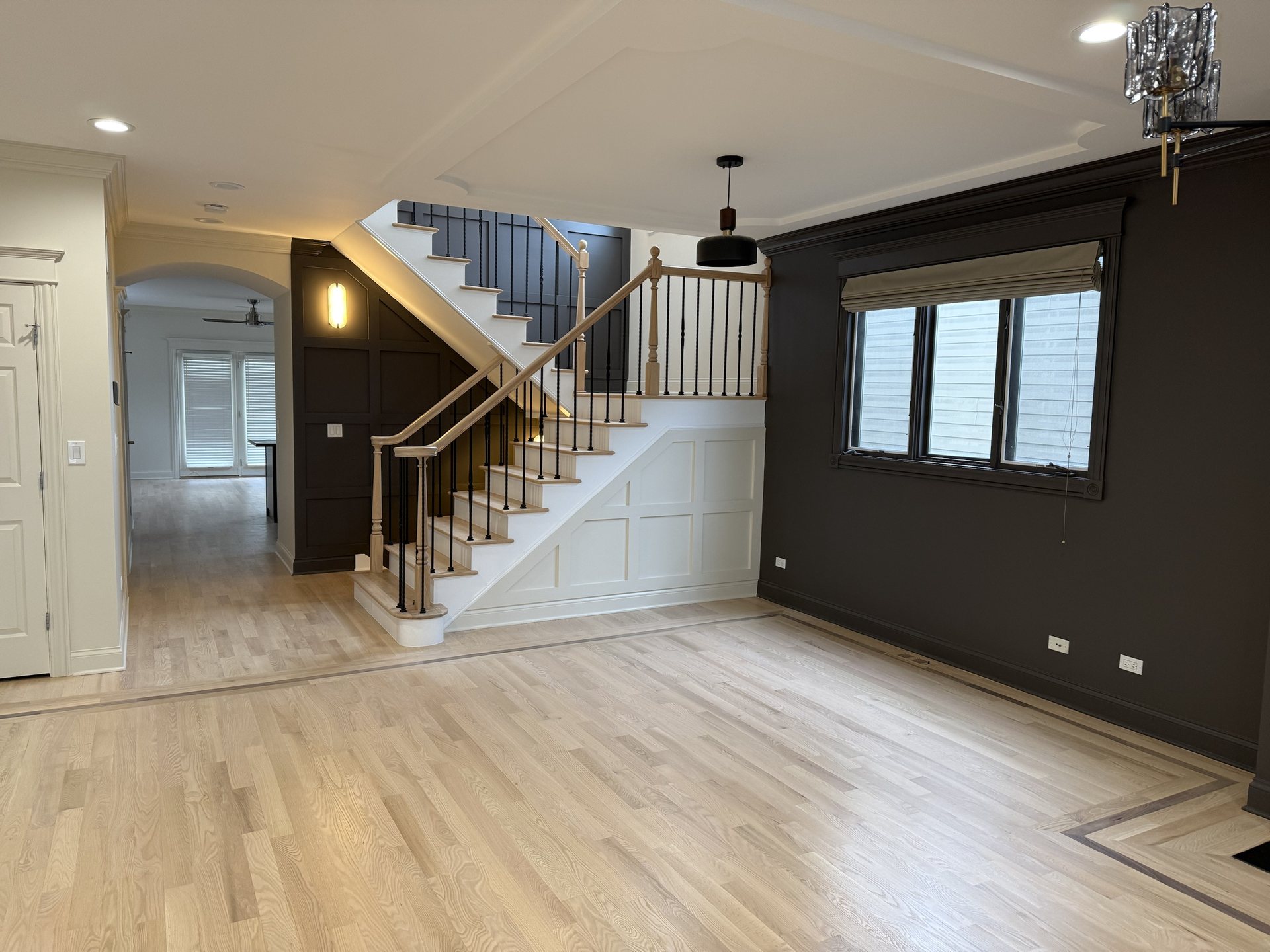
Short answer: yes, you can refinish hardwood floors in a Chicago winter — and for many homeowners it is a great time to do it. Below we explain how winter affects the work, how soon you can walk on the new finish, why gaps between boards show up every January, and what to do (and not do) to keep your floors healthy until spring.
Can You Refinish Hardwood Floors in Winter?
Yes. The biggest concern people have is the smell and keeping windows open in freezing weather. That was a real issue with old oil-based and acid-cured (“Swedish”) finishes. Today we finish every FLOORecki project with Bona Traffic HD, a two-component waterborne finish that Bona describes as low in odor and VOCs, so the house can stay closed and heated while we work.
What matters in winter is keeping the house warm. Waterborne finishes dry slower when the room is cold, so keep the heat on during the project — Bona’s recommended application range is roughly 65–80°F. If you usually turn the thermostat way down when you’re away, leave it at a normal setting for the days we are there.
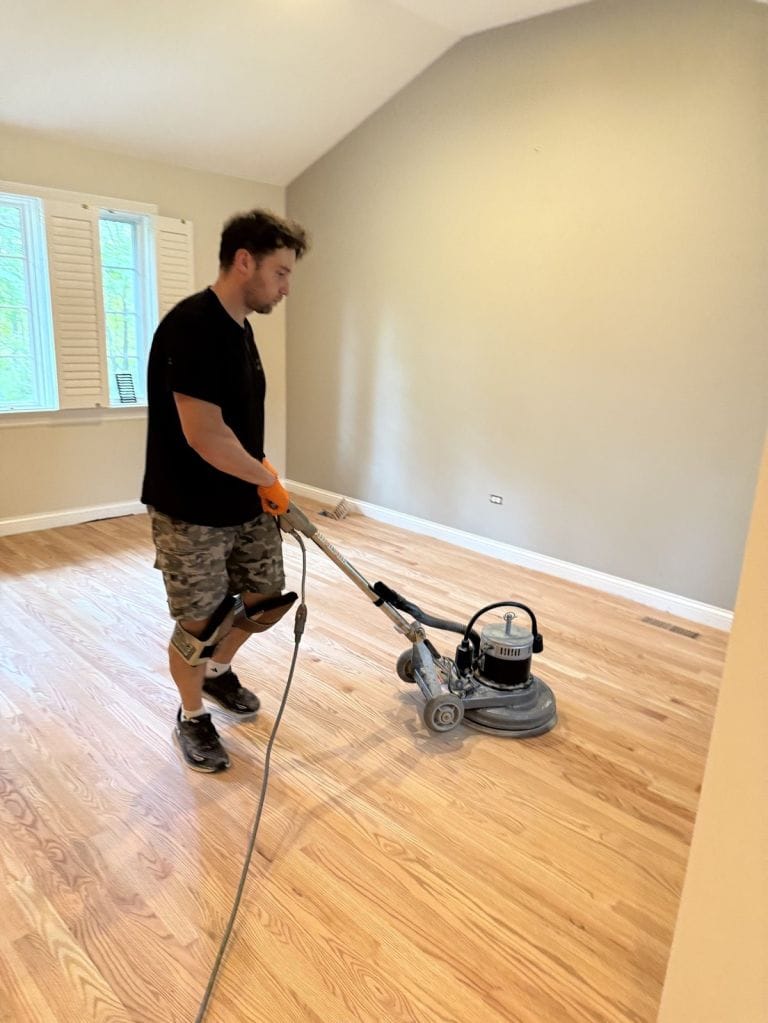
How Soon Can You Walk on the Floor?
Bona Traffic HD is one of the fastest-curing professional finishes available. Under normal indoor conditions, Bona’s published guidelines are:
| Stage | Typical time after the last coat |
|---|---|
| Between coats | About 2–3 hours |
| Socks-only, light foot traffic | About 6–8 hours |
| Normal use (shoes, moving around) | About 12 hours |
| Rugs back down / full cure | About 3 days |
Cold rooms stretch these times, which is another reason to keep the heat on. We’ll give you exact timing for your project, including when furniture can go back (always with felt pads).
Why Do Gaps Appear Between Boards in Winter?
Every winter we get calls from homeowners who suddenly see thin gaps between their floorboards. In most cases this is normal. Chicago has humid summers and very dry winters. When cold outdoor air is heated indoors, indoor humidity drops, the wood gives up moisture, and each board shrinks slightly. In spring and summer the boards take moisture back and the gaps close again.
Gaps usually become a concern only if they stay open after the humid season, or if boards start cupping, crowning, or cracking. Industry guidance is to judge gaps at the end of summer, not in the middle of January.
Good to know: wider planks, and floors installed during humid months, tend to show bigger seasonal gaps. That doesn’t mean the floor was installed badly — it is how real wood behaves.
How to Protect Hardwood Floors During a Chicago Winter
- Watch indoor humidity. Many hardwood manufacturers specify roughly 35–55% relative humidity. A $15 hygrometer tells you where you are. A whole-house or room humidifier helps on very dry days — but on the coldest days keep an eye on windows, because humidity that’s too high causes condensation and frost.
- Stop salt and snow at the door. Ice melt and grit act like sandpaper and can dull or stain the finish. Use a mat outside and a washable rug inside every entry, and take boots off at the door.
- Wipe up melted snow quickly. Standing water is the enemy of any wood floor.
- Use the right cleaner. A pH-neutral hardwood cleaner and a microfiber mop — never steam mops or soaking wet mops.
- Keep felt pads on furniture. Pads wear out; check them once a year.
Is Winter a Good Time to Install New Hardwood?
It can be, as long as the wood is handled correctly. Before we install, we measure the moisture content of both the wood and the subfloor to make sure they are within the right range. Solid hardwood usually needs about a week to acclimate in your home; engineered flooring usually needs less. A typical 800 sq ft installation takes about 3 days, depending on the layout of the rooms and the type of wood. Learn more on our hardwood floor installation page.
Frequently Asked Questions
Do I need to leave my house during a winter refinish?
Not necessarily. Many of our clients stay home during the project and simply use the parts of the house we’re not working on — for example, sleeping in the basement or upstairs while the floors dry. If your project includes staining, we usually recommend sleeping somewhere else for the night. We’ll walk you through the schedule before we start.
Can I open windows during refinishing in winter?
You don’t need to keep them open. Fresh air helps, but freezing air slows drying, so keep the house heated. We can crack windows for short periods while we work, and many homeowners like to air the house out for a few minutes when they come back.
Will the gaps in my floor close by themselves?
Normal seasonal gaps usually close as indoor humidity rises in spring and summer. If gaps remain wide after summer, or boards are cupping, call us for an assessment.
How much does refinishing cost in Chicago?
See our hardwood floor refinishing cost guide, or get a ballpark price in under a minute with our Instant Quote tool.
Planning a Winter Floor Project?
FLOORecki Floors & Stairs is a family-owned hardwood floor and stair company serving Chicago and the suburbs. Learn more about our hardwood floor refinishing and stair services, get an instant estimate, or call or text us at 773-790-3887.
No comment