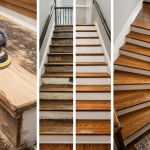
A full stair renovation in Chicago typically costs between $3,500 and $12,000 depending on scope — but stairs are priced very differently than floors. There's no simple per-square-foot number here, because pricing depends on the number of treads, the materials chosen, and how many components (railings, spindles, newel posts) are part of the project. This guide breaks down exactly what drives stair renovation costs in 2026.
Unlike floor refinishing, where price scales with square footage, stair renovation is priced by component — because a staircase has several distinct parts that can each be repaired, replaced, or refinished independently.
🪜
Treads & Risers
The horizontal steps you walk on (treads) and vertical faces between them (risers). Often refinished or replaced together.
🔘
Spindles / Balusters
The vertical posts supporting the handrail. Wood-to-iron spindle conversion is one of our most popular upgrades.
🏛️
Newel Posts
The larger posts anchoring the railing at the top and bottom of the stairs. Often the most visually impactful element to update.
✋
Handrail
The railing itself — can be refinished to match new treads, or replaced entirely for a different profile or wood species.
📏
Skirt Boards
The trim boards running along the wall side of the staircase. Often overlooked but visible if not refinished to match.
🔧
Structural Repairs
Squeak fixes, re-anchoring loose components, or addressing old nail-only construction that's developed play over the years.
Stair Renovation Cost by Component — 2026 Pricing
Component
Price Range
Tread refinishing
$60 – $70 / tread
New oak tread installation
$250 – $400 / tread
Riser refinishing
$55 – $65 / riser
Riser painting (white, standard)
$35 – $45 / riser
Iron spindle replacement
$25 / spindle
Wood spindle replacement
$18 – $30 / spindle
Newel post refinishing
$150 – $200 / post
Newel post replacement
$300 – $600 / post
Handrail refinishing
$30 – $35 / linear foot
Handrail replacement
$200 – $450 / section
Skirt board refinishing
$200 / board
Squeaky stair repair
$850 / flight
Why per-component, not per-square-foot: Two staircases with the same number of steps can cost very differently depending on whether you're refinishing existing wood, replacing carpet with new treads, or doing a full structural rebuild. Pricing each component separately gives you control over exactly what you're paying for.
Full Renovation Packages — What a Complete Project Looks Like
Most homeowners don't pick components one at a time — they want the whole staircase to look cohesive. Here's what typical complete renovations cost for a standard 13–15 step Chicago staircase:
Package
What's Included
Typical Cost
Refinish & Update
Refinish treads, paint risers white, replace spindles with iron
$3,500 – $5,500
Carpet Removal & Treads
Remove carpet, install new oak treads, iron spindles, refinish rail
$6,000 – $9,000
Full Renovation
New treads, risers, newel posts, spindles, handrail — top to bottom
$8,000 – $12,000+
Structural Rebuild
Full re-screw of old nail-only construction, plus cosmetic update
$2,000 – $4,000 add-on
Many of our Chicago and suburban clients combine stair renovation with floor refinishing in the same project — when both are done together, the stain and finish are matched perfectly throughout the home, and you save on setup costs compared to two separate projects.
Most popular stair renovation in Chicago: The single most requested project we do — by a wide margin — is carpet removal, new Red Oak treads, white painted risers, black iron spindles, and a refinished handrail. This combination consistently delivers the most visible transformation for the investment, typically running $6,000–$9,000 for a standard staircase.
Does Stair Renovation Increase Home Value?
A staircase is one of the first things people notice walking into a home — it sets the tone before they've even seen the rest of the house. Replacing worn carpet with hardwood treads, updating outdated wood spindles to black iron, and refinishing a tired handrail consistently makes a strong first impression for buyers and is something we hear about often from clients preparing to list their home.
What Affects Stair Renovation Pricing
Number of steps. More treads, risers, and spindles means more line items — straightforward, but it adds up quickly on longer staircases.
Wood species. Red Oak is the standard, most affordable choice — the pricing throughout this guide assumes Red Oak. White Oak typically adds 10-20% to tread and material costs; custom species are quoted individually.
Current condition. Carpeted stairs need removal first. Stairs with structural looseness from old nail-only construction need re-screwing and adhesive before cosmetic work makes sense.
Newel post complexity. Simple square posts cost less than turned or custom-profile posts.
Code height upgrades. Older Chicago homes sometimes have railings built to a 32" standard rather than current 36" code — bringing this up to code adds to post and spindle costs.
Location. North Shore adds ~8%. High-rise Chicago buildings may add 20-30% for access logistics.
Get Your Instant Stair Renovation Estimate
Select "Stairs" in our Instant Quote tool for a ballpark price based on your specific project — under 60 seconds, no phone call needed.
Greystone condo with worn original treads and outdated wood spindles. We sanded and refinished the treads, painted the risers white, and replaced the wood spindles with black iron balusters. Done alongside refinishing of the main living area floor for a matched finish throughout.
Scope14 treads + risers + iron spindles
StainDuraSeal Jacobean
Total Investment (stairs portion)$4,200
📍 Schaumburg, IL
Carpet Removal + New Oak Treads
Typical subdivision home with carpeted stairs from original construction. Homeowner wanted hardwood treads to match the rest of the main floor, which had carpet removed and refinished separately. We removed the stair carpet, installed new Red Oak treads, and added black iron spindles for a clean, modern contrast.
Scope15 new oak treads + iron spindles
IncludesCarpet removal, handrail refinish
Total Investment$7,800
📍 Oak Park, IL
Structural Rebuild — 1920s Staircase
Entire staircase had developed significant play from decades of nail-only original construction with no adhesive. Before any cosmetic work, we re-screwed every structural joint and added construction adhesive throughout. Followed by tread refinishing and a full newel post and spindle replacement to bring the railing up to current 36" code height.
ScopeStructural rebuild + full cosmetic renovation
IncludesCode height upgrade (32" → 36")
Total Investment$10,500
📍 Wilmette, IL
Carpet Removal + Most Popular Package
North Shore colonial with original carpeted stairs the homeowners wanted updated to match a recent main-floor refinishing project. We removed the carpet, installed new Red Oak treads, painted the risers white, replaced the existing wood spindles with black iron, and refinished the original handrail and newel posts to match.
ScopeCarpet removal + new oak treads + iron spindles
IncludesHandrail & newel post refinishing
Total Investment$8,400
Frequently Asked Questions
How much does it cost to replace carpeted stairs with hardwood?
Carpet removal plus new Red Oak tread installation typically runs $6,000–$9,000 for a standard 13-15 step staircase, including iron spindle replacement and a refinished handrail — this is our most requested stair project. The exact cost depends on the number of steps and whether the existing newel posts and handrail can be reused or need replacement.
Can existing stair posts and handrails be reused instead of replaced?
In many cases, yes. If the existing newel posts and handrail are structurally sound, they can often be sanded and refinished to match new treads and spindles, which reduces overall project cost while still delivering a dramatically updated look. We assess this during the on-site evaluation — replacement is only necessary when the existing components are damaged, the wrong height for code, or don't match the new style you want.
How much does a basic stair update cost in Chicago?
A basic refinish-and-update package — refinishing existing treads, painting risers white, and swapping wood spindles for black iron — typically runs $3,500 to $5,500 for a standard 13-15 step staircase. This is the most popular project we do for homeowners wanting a meaningful visual update without a full rebuild.
Is it cheaper to refinish stair treads or replace them?
Refinishing is almost always cheaper when the existing treads are in good structural condition — it's priced at $60-70 per tread versus $250-400 per tread for new installation. Replacement only makes sense when treads are carpeted (and you want hardwood), damaged beyond refinishing, or you want a different wood species or width than what's currently there.
Why does my whole staircase feel loose, not just specific parts?
This is common in older Chicago homes where staircases were originally built with nails only, no glue — standard construction decades ago. Over time, wood shrinkage and shifting causes the entire structure to develop play. The fix is a structural rebuild: re-screwing every joint and adding construction adhesive throughout, which is a separate cost from cosmetic work like refinishing or new spindles.
Can I combine stair renovation with floor refinishing to save money?
Yes, and we recommend it whenever both are needed. Combining projects means a single setup and mobilization cost instead of two, and — more importantly — the stain and finish on your stairs and floors can be matched perfectly since they're done in the same visit with the same materials.
How long does a full stair renovation take?
A refinish-and-update package typically takes 2-3 days. A full renovation with new treads, posts, and spindles usually takes 4-6 days depending on complexity. Structural rebuilds for old nail-only construction add 1-2 days before cosmetic work can begin.
Do you work on stairs in older Chicago two-flats and bungalows?
Yes — older Chicago staircases are a significant part of what we work on. We regularly handle structural issues specific to older construction (nail-only joints, outdated railing heights) alongside cosmetic updates. Understanding the difference between a structural issue and a cosmetic one is important for getting an accurate quote.
Ready to Get a Real Number for Your Stair Project?
Use our Instant Quote tool for a ballpark estimate in 60 seconds — or call us directly to schedule a free on-site evaluation anywhere in Chicago or the suburbs.
If you’re planning to refinish your hardwood floors, one of the essential tools you’ll need is a floor sander. Floor sanders are powerful tools that can strip away old finishes and surface imperfections to leave your floors looking smooth and new. In this blog post, we’ll go over the different types of floor sanders used in the refinishing process and what makes them unique.
Belt Sanders
Belt sanders are one of the most common types of sanders used in hardwood floor refinishing. They are powerful machines that use a continuous loop of sandpaper to remove the top layer of the hardwood flooring. Belt sanders are available in various sizes, with larger sanders being more powerful and able to remove more material quickly.
Drum Sanders
Drum sanders are another popular type of floor sander. They have a rotating drum that holds sandpaper and moves across the surface of the floor. Drum sanders can be a bit more difficult to maneuver than belt sanders, but they are excellent for removing deeper scratches and dents in the hardwood floor.
Orbital Sanders
Orbital sanders are designed for finishing and polishing hardwood floors. They are less powerful than belt and drum sanders, but they are perfect for smoothing out the surface of the floor and removing any remaining surface imperfections. They are also great for reaching tight spaces that the larger sanders cannot access.
Edgers
Edgers are small sanders that are used to sand the edges of the room where the larger sanders cannot reach. They are designed to fit in tight spaces and are ideal for sanding corners and edges around cabinets, doorways, and baseboards.
Hand Sanders
Hand sanders are used for finishing and fine-tuning the surface of the hardwood floor. They are often used after the larger sanders have done their job and are ideal for removing any remaining surface imperfections or scratches.
In conclusion, there are several types of floor sanders used in hardwood floor refinishing, each with its unique features and benefits. While some of these sanders can be rented from home improvement stores, it is essential to have experience in using them before attempting to refinish your floors. Hiring a professional with the right tools and expertise can ensure that your hardwood floors look their best and have a long-lasting finish.
When it comes to hardwood floor finishes, the options can be overwhelming. From oil-based to water-based, matte to glossy, there are so many different types to choose from. However, if you’re looking for a high-quality finish that will protect your hardwood floors for years to come, Bona Traffic HD is an excellent choice. Here are some reasons why people should choose Bona Traffic HD for their hardwood floors.
Durability
Bona Traffic HD is a commercial-grade hardwood floor finish that is known for its durability. It’s specifically designed for high-traffic areas, so it can withstand heavy foot traffic, furniture, and even pets. This finish is so durable that it’s often used in commercial settings such as malls, schools, and museums.
Easy Application
One of the benefits of Bona Traffic HD is that it’s easy to apply. Unlike oil-based finishes, it dries quickly and doesn’t have a strong odor. Plus, it’s easy to clean up with water. This makes it a popular choice for homeowners who want to tackle a DIY project.
Low VOCs
Bona Traffic HD is a water-based finish, which means it has low VOCs (volatile organic compounds). This makes it a safer option for your family and the environment. Plus, it won’t yellow over time like some oil-based finishes do.
Beautiful Finish
Finally, Bona Traffic HD gives hardwood floors a beautiful, natural-looking finish. It’s available in different sheens, including matte, satin, and gloss, so you can choose the one that best suits your preferences. The finish is also clear, so it won’t alter the color of your hardwood floors.
In conclusion, if you’re looking for a high-quality hardwood floor finish that’s durable, easy to apply, and environmentally friendly, Bona Traffic HD is an excellent choice. Its commercial-grade durability, low VOCs, and beautiful finish make it a popular option for homeowners and commercial settings alike.
Here are some tips for cleaning and maintaining your floors treated with Bona Traffic HD:
Regular sweeping and dusting: Use a soft-bristled broom or a microfiber mop to sweep or dust your floors regularly. This will help prevent dirt, dust, and other debris from scratching the surface of your floors.
Use a pH-neutral cleaner: When cleaning your floors, use a pH-neutral cleaner designed for hardwood floors. Bona Hardwood Floor Cleaner is a popular choice that is specially formulated for use with Bona Traffic HD. Avoid using harsh or abrasive cleaners that can damage the finish.
Avoid excess water: When mopping your floors, use a damp mop rather than a wet mop to avoid excess water. Excess water can seep into the gaps between floorboards, causing damage over time. Be sure to wring out your mop thoroughly before use.
Avoid vinegar and oil-based cleaners: While vinegar and oil-based cleaners may be natural and effective for cleaning other surfaces, they can damage the finish on your Bona Traffic HD floors. Stick to pH-neutral cleaners designed specifically for hardwood floors.
Use furniture pads: To prevent scratches and dents on your floors from furniture, use furniture pads under legs and feet. This will help distribute the weight of the furniture and prevent it from digging into the finish.
By following these tips, you can help extend the life of your Bona Traffic HD floors and keep them looking beautiful for years to come.
More customers are looking for environmentally friendly flooring. In other words, they want to go green and save the earth. It’s important to look for material that can be renewed and recycled.
CORK
A great renewable material manufactured from the bark of the cork. Cork trees regrow their bark every 3 years (it’s a protective outer coating), no need for the tree to be cut down. Some of the amazing flooring is made from recycled wine bottle stoppers. Cork comes in variety of colors and textures that can work as a durable floor, yet earthy. Cork panels can be snapped together and laid over any subfloor, or even existing flooring.
BAMBOO
A popular grass flooring trend that shares similar characteristic as wood. Just like solid hardwood, bamboo is durable and available in variety of colors. It grows in warm climates and unlike hardwood, which can take 20 years to regrow; bamboo is a fast-growing plant that’s available in massive quantities. Like hardwood flooring, bamboo may be refinished depending on the thickness of the floor. It can also be installed using a nail-down, glue-down or click-and-lock method.
RECLAIMED WOOD
Wood that already served a purpose in a previous life can be reused- is one of the most eco-friendly options available. Typically, reclaimed wood s is rescued from old barns, factories, warehouses, boxcars and wine barrels. The wood needs to be cleaned and free of nails before installed and finished onsite with low VOCs water-based polyurethane. Salvageable wood helps to reduce the need to plant and harvest more trees, as it doesn’t end up in a landfill or rot.
Besides the holiday cheer winter can also mean harsh weather conditions that can cause issues for homeowners with hardwood flooring. It’s crucial to take every step necessary to make sure the floors stay in a good shape all year long.
In the winter, water melting from the snow and rock salt can pose a threat to your hardwood floors, as it can scratch and warp the floorboards. To help avoid the issue, use mats at the entranceways and use towels to dry off any spills and puddles. Water that is left unattended might cause permanent damage that later required refinishing or even replacement. Warping caused by water damage can also dull the varnish and find it’s way to the wood. Dried salt leaves
Wood flooring loses some of its moisture during the winter, when homes are heated the air is dry. Relative humidity levels for the floors should be 35-55%. If it’s lower than recommended, the boards start to shrink creating thin gaps. Luckily, this change is only temporary, after the humidity level rise again the gaps will close up. Prevent the dryness problem by using a humidifier during the wintertime and keeping the temperatures stable.
Choosing the type of hardwood flooring which will be perfect for your home can seem straightforward yet it’s an important decision any homeowner will have to make when committing to any and every renovation they plan. Many of our customers wonder if prefinished or unfinished wood is a better fit for their home project, but honestly both have their advantages!
Advantages of Prefinished Flooring
Time
Prefinished flooring is almost ready for your room to be installed by our professional staff. It is pre-sanded, stained and coated with varnish done right at the factory. The installation is the only thing that the homeowner needs to think about. Whereas, the unfinished hardwood flooring comes raw, so it does need to be finished on site after the installation is done. There is no denying that prefinished flooring is a much faster process that doesn’t involve any sanding or coating. Once prefinished flooring is installed, furniture can be moved back in its place almost immediately, and the floor is ready to be walked over and enjoyed by you and your family in almost no time. On the flip side unfinished hardwood floors do need to be sanded, stained and coated, which can take a bit more time but with other advantages you will need to take into consideration before making your final choice. With all of this in mind, planning ahead is crucial!
Less Mess /No Smell
Prefinished flooring is almost dustless and there are no added chemical smells brought into your home during installation. The material has already been treated in the factory and once the stain is sealed at the factory, ventilation is not an important aspect needed to consider for the installation process. Before the need for staining and sealing, sanding unfinished floors does create dust even though there are vacuums hooked to the machines.
Cost
Prefinished hardwood flooring labor cost is cheaper than installing/refinishing unfinished wood. Although prefinished flooring material may cost more than unfinished, the labor costs are reduced.
Advantages of Unfinished Flooring
Appearance/ Options
Unfinished flooring happens to have more grain patterns, even though prefinished flooring is usually real wood. Prefinished wood comes with a protective surface layer that makes it look less like the real thing. The beauty of unfinished wood is that it can be personalized to your preference. Our qualified professional craftsman rather than the factory will create unusual textures on different types of wood to your liking. In addition, the stains can be mixed (must be from the same manufacturer), varnished with oil-based or water-based finish and styled with sheen level: matte, satin, semi-gloss or glossy. All of this is done by hand to make the floor exactly as you always wished for.
Matching Made Easy
Many of our customers decide to get their floors done for each room separately at different times. This is usually preferred either to have a space to store the furniture (during refinishing) or a particular material is more cost-effective at a given time of the year. The beauty of unfinished hardwood is that it can be added to your room to be matched with existing hardwood flooring at any time; even if a previously purchased option is no longer available.
Cleaning
The grooves of a prefinished floor create gaps that trap dirt easily, which makes it harder to clean. Rather than cleaning a finished onsite floor which is mostly flat.
Repairs/Refinishing
A finished hardwood onsite can be refinished to remove any dents or scratches, while prefinished damaged planks would need to be replaced by the factory making it hard to match on site. Therefore, it’s highly recommended to store the extra boxes of flooring, since the prefinished products are often custom ordered and can get discontinued. The daily use of flooring will result in normal wear and tear and also with anything; scratches. Un-finished wood can be fixed/restored onsite multiple times before the damaged material is actually seen as a problem. Prefinished floors can only be sanded once or twice over the span of their lifetime due to thicker polyurethane layers applied by the factory. This results in deep sanding, especially to match stain from the edges as well as doubled labor costs.
Our company works with both types of flooring, and it usually boils down to you to decide which option suits your situation best during renovation. We’re always here to help with that decision!
Ready to give the floor a refreshing look? Seek no further, the screen and re-coat process can revitalize worn or dull hardwood floor finishes. In addition, it provides an option of changing level of the finish.
Ever wondered how it’s done? This process is sometimes referred to as “buff and re-coat” since a buffer is used instead of a drum sander machine. The crew-members use a buffer pad, to remove scuffs made on the finishing coat, by moving it slowly in a back and forth pattern across the surface. Once the first coat is screened, then it’s vacuumed thoroughly to smooth the surface. It’s crucial for the floor to be completely smooth and free of any contaminant, so the new coat of water-based or oil-based polyurethane can adhere to the old one that was just screened.
As mentioned in the previous blog, polyurethane are finishes that are meant to protect floors from everyday living. Just because it’s meant to protect the hardwood floor, doesn’t mean it will last lifetime. Over time, the finish gets thinner and more scratches or dents become noticeable, especially when it’s deep enough to expose bare wood. But before it gets to this damaging point (which often requires sanding), it’s recommended to screen and recoat the floor once it turns dull or light scratches start to show. This will postpone a need to refinish (sand) the floors, which generates a higher cost for both labor and material as compared to screen and re-coat.
Your hardwood floors don't always need full sanding and refinishing. If your floor is structurally sound but starting to look dull, scratched, or tired — a professional Deep Clean or Floor Refresh (screen & recoat) can restore them in one day, at a fraction of the cost. After 18 years in Chicago, here's exactly when each service makes sense — and what happens if you skip maintenance entirely.
Professional scrubber machine + Bona Deep Clean solution. Removes built-up grime, grease, cleaning product residue, and pet odors that regular mopping can't reach. No sanding, no downtime.
✨ Floor Refresh (Screen & Recoat)
From $1.50/sq ft
Light buffing (screening) of the existing finish + a fresh coat of Bona Traffic HD. Removes minor surface scratches and scuffs. Restores sheen and protection. One day, no heavy sanding.
🪵 Full Refinishing
From $4.00–$5.75/sq ft
Complete sand to bare wood + stain + 3 coats of Bona Traffic HD. Required for deep scratches, dents, significant discoloration, or stain color change. 3–4 days minimum.
The big picture: Think of it like car maintenance. Deep Clean is a professional detail. Floor Refresh is a paint touch-up. Full refinishing is a complete respray. Most floors only need full refinishing once every 10–20 years — the services in between keep them looking great for much less money.
Floor Refresh vs. Full Refinishing — How to Decide
✅ Floor Refresh works when:
→ Floor is flat — no raised edges from moisture
→ Only minor surface scratches and scuffs
→ Finish is wearing but not completely gone
→ No significant discoloration or staining
→ You want to keep the same stain color
→ Floor was last refinished 5–10 years ago
⚠️ Full refinishing needed when:
→ Deep scratches that catch your fingernail
→ Boards cupping or raised edges (moisture damage)
→ Heavy discoloration, pet stains, water damage
→ Finish completely worn through to bare wood
→ You want to change the stain color
→ Floor hasn't been refinished in 15–20+ years
Stain touch-ups during Refresh: Depending on your floor's color and condition, we can sometimes do minor stain touch-ups in high-wear areas during a Floor Refresh — minimizing visible discoloration and potentially saving the cost of full refinishing for several more years. Ask us about this at the estimate.
Bona Deep Clean — What Regular Mopping Can't Do
Even the best mop usually just pushes dirt around the surface. Over time, a thin layer of residue builds up — kitchen grease, cleaning product film, pet residue — making floors look dull and "tired" even though the finish may still be in good condition.
What Bona Deep Clean removes:
Built-up kitchen grease — especially near stoves and cooking areas
Cleaning product residue — many household cleaners leave a matting film over time
Dirt embedded in finish micropores — invisible to the eye but dulls the surface
Shoe and rubber marks from high-traffic areas
Pet residue and odors — especially in homes with dogs or cats
High-traffic corridor buildup — hallways and entryways accumulate the most
Deep Clean before Floor Refresh — always: We always recommend a Bona Deep Clean before screen & recoat. A clean surface means significantly better adhesion for the new top coat. Bona also has a specialized prep system specifically designed for recoat — it removes contamination that regular cleaning misses and dramatically improves how well the new finish bonds to the existing one. Book both together and get a 20% bundle discount on the Floor Refresh.
⚠️ Products That Can Prevent Screen & Recoat
This is something most homeowners don't know — and it's one of the most common problems we encounter. Many popular floor care products leave a residue that prevents new finish from bonding properly. If you've used any of these products, it doesn't necessarily mean you can't do a screen & recoat — but it requires proper prep first.
Product
Problem
Can we recoat?
Bona Polish
Leaves a polymer film that prevents adhesion
✅ Yes — with Bona recoat prep system
Rejuvenate
Silicone-based — very difficult to remove
⚠️ Often not possible — test required
Mop & Glo / Future
Acrylic polymer buildup
⚠️ Often not possible — test required
Murphy Oil Soap
Leaves oily residue that prevents bonding
✅ Yes — with thorough Bona prep
Wax
Must be fully stripped — cannot recoat over wax
❌ No — full strip required first
Bona Hardwood Cleaner
No residue — designed for Bona finishes
✅ Always compatible
The most common issue we see: Homeowners use Bona Polish (the liquid in the squeeze bottle) thinking it's the same as Bona Cleaner. It's not — Polish adds a layer that must be removed with Bona's recoat prep system before a screen & recoat can be done properly. Always use Bona Hardwood Floor Cleaner for routine cleaning — not Polish, not Oil Soap, not generic floor cleaners.
What Happens If You Skip Maintenance
This is the story we see play out in Chicago homes more often than we'd like. It starts with something small.
Year 1–3: Minor surface scratches appear
Normal wear from daily life — shoes, furniture, pets. At this stage, a Floor Refresh handles everything in one day.
Year 3–5: Top coat starts wearing through
The protective finish thins in high-traffic areas. Scratches get deeper. Dirt and grime start accumulating in the micro-scratches — which accelerates wear further. A Refresh is still possible but more urgent.
Year 5–8: Bare wood exposed in high-traffic areas
The finish is gone in spots. Bare wood is now exposed to everyday moisture — from mopping, spills, humidity. The natural wood color becomes visible and uneven. Full refinishing is now required.
Year 8–12: Permanent staining begins
Moisture and grease penetrate into the wood fiber itself. Dark stains form — from water, pet accidents, cooking grease that reaches bare wood. Some stains cannot be sanded out and require individual board replacement. A project that would have cost $1,500 now costs $5,000+.
Year 12+: Board replacement during refinishing
Permanent moisture or grease stains that don't sand out require pulling individual boards and replacing them — matching old-growth Chicago hardwood is difficult and expensive. What started as a simple maintenance issue is now a major project.
The real cost of skipping maintenance: A Floor Refresh at year 3–5 costs $1,500–$2,500 for a typical Chicago main floor. Waiting until year 8–12 means full refinishing at $4,000–$6,000 — plus potential board replacement at $25–$50 per board. Maintenance isn't an expense. It's an investment that delays far larger costs.
Hardwood Stair Refresh
Stairs are the highest-traffic surface in any home — and the first place where finish wears through. Every step concentrates foot traffic on the same 4-6 inch strip of each tread. Without periodic maintenance, stair treads wear through significantly faster than main floor areas.
Stair tread refresh (screen & recoat) — $30 per tread
Same process as floor refresh — light screening + new coat of Bona Traffic HD
Can be done at the same visit as a floor refresh for maximum efficiency
White painted risers can be touched up at the same time if needed
Bona anti-slip finish available for stair treads — grip without changing appearance
Bona anti-slip finish for stairs: For clients concerned about slip safety — especially with children or elderly family members — we can apply Bona's anti-slip coating to stair treads. This gives you the clean hardwood look with added grip. No runner needed, no change to the appearance.
What to Expect on the Day
1
Move furniture from the first room
You don't need to empty the whole house at once. We work room by room — move furniture from one room, complete the work, move to the next. Most furniture can be shifted to adjacent rooms.
2
Bona Deep Clean (if included)
Professional Bona scrubber machine with Bona Deep Clean solution. No harsh chemicals, no strong smell. Floor dries in 30–60 minutes. If recoat prep is needed (due to previous product use), it's applied at this stage.
3
Screening (light buffing)
A buffer with a fine screen pad lightly abrades the existing finish — creating adhesion for the new top coat. No heavy sanding, no dust, no bare wood exposed. This removes minor surface scratches.
4
New top coat of Bona Traffic HD
A fresh coat of Bona Traffic HD applied — the same commercial-grade finish we use on every project. Low VOC, fast drying. Walk on the floor within a few hours.
5
Furniture back same day or next
Most furniture can go back the next day. Heavier pieces and rugs typically wait 48–72 hours. We give you a clear timeline before we leave.
✅ Stay home throughout. No heavy sanding dust. No strong chemical smell. No need to relocate. Work room by room — not the whole house at once. Most projects complete in one day.
Perfect Timing: Schedule Around Your Vacation
Floor Refresh and Deep Clean are ideal to schedule when you're going away — even for a long weekend. We work while you're away, floors cure fully before heavy foot traffic, and you come home to floors that look completely refreshed. No coordination around work-from-home schedules or kids.
Chicago timing tip: The most popular booking windows are just before summer vacation (June–July) and before the holiday season (October–November). If you have a specific travel date in mind, book early — these slots fill quickly.
FLOORecki Annual Floor Check
Most Chicago homeowners don't know when their floors need attention until it's too late — and the repair cost is significantly higher than it would have been. We offer a simple annual check that takes the guesswork out of hardwood floor maintenance.
FLOORecki Hardwood Care Plan
A simple maintenance schedule that keeps your floors in top condition — and avoids costly surprises.
Every 1–3 Years
🧹 Bona Deep Clean
Remove built-up grime and restore natural appearance. Extends finish life significantly.
Every 4–7 Years
✨ Floor Refresh
Screen & recoat with fresh Bona Traffic HD. Removes surface scratches, restores protection.
Every 15–20 Years
🪵 Full Refinishing
Complete sand, stain, and finish. Only needed when the floor has deep damage or you want a color change.
Annual Floor Check — free with any service: We come out, inspect your floors honestly, and tell you exactly what's needed — Deep Clean, Refresh, or nothing yet. No upselling. No pressure. Just a clear picture of where your floors stand and what will keep them looking great longest.
Costs in Chicago 2026
Service
Price
Timeline
Bona Deep Clean only
$1.50/sq ft (under 1,250 sq ft) $1.00/sq ft (1,250+ sq ft)
Same day
Floor Refresh (screen & recoat) only
$1.50/sq ft
1 day
Deep Clean + Floor Refresh (bundle)
Deep Clean + 20% off Refresh
1 day
Stair tread refresh (screen & recoat)
$30/tread
Same day as floor
Full Hardwood Refinishing
$4.00–$5.75/sq ft
3–4 days
Minimum charge — Deep Clean
$600
—
Minimum charge — Floor Refresh
$850
—
Real savings example: A 1,000 sq ft main floor full refinishing runs $4,000–$5,750. A Deep Clean + Floor Refresh combo on the same floor runs approximately $2,350 — and takes one day instead of four. If your floor qualifies, that's a saving of $1,500–$3,000+ and three fewer days of disruption.
Get Your Instant Deep Clean or Floor Refresh Estimate
Select "Deep Clean" or "Floor Refresh" in our Instant Quote tool — 60 seconds, no phone call needed. Bundle both for a 20% discount on the Refresh.
How do I know if my floor needs a Refresh or full refinishing?
Run your fingernail across a scratch — if it catches, it's likely too deep for a Floor Refresh. Check boards near windows and exterior walls for raised edges or cupping. Look at the finish in direct sunlight — if it's worn through to bare wood in spots, refinishing is needed. If the floor is flat, scratches are surface-level, and the finish is just dull — a Floor Refresh is likely the right call. We assess this honestly at the estimate.
Can Bona Deep Clean remove dog urine odors and stains?
Bona Deep Clean removes surface residue and odors from pet accidents that haven't penetrated the wood. If urine has soaked through the finish into the wood fiber, it leaves a permanent dark stain that Deep Clean cannot remove — that requires sanding and board replacement during full refinishing. The sooner pet accidents are cleaned up, the less damage they cause.
Can Bona Deep Clean remove Murphy Oil Soap or Bona Polish buildup?
Murphy Oil Soap residue can typically be removed with Bona's deep cleaning system, making the floor suitable for screen & recoat. Bona Polish requires Bona's specialized recoat prep system — not just Deep Clean — to properly remove the polymer film and ensure good adhesion. We check for product contamination at the estimate and use the appropriate prep before any recoat.
Can you recoat over Rejuvenate or Mop & Glo?
These are silicone or acrylic-based products that are very difficult to remove and often prevent proper adhesion. We do a test in a small area before committing to a recoat on contaminated floors. In some cases, the floor needs a light sand to remove the contamination before a new finish can be applied. We're honest about this at the estimate — if it can't be done properly, we'll tell you.
How long does a Floor Refresh last?
Typically 3–5 years with normal household use and proper Bona-compatible cleaning. The new coat of Bona Traffic HD adds a full commercial-grade protective layer. Avoid steam mops, wet mops, and general household cleaners — these shorten the life of any hardwood finish significantly.
Do I need to leave my home during Deep Clean or Floor Refresh?
No — you can stay home throughout. No heavy sanding dust, no strong chemical smell. We work room by room, so you can move between areas as we progress. Most clients find it far less disruptive than they expected. The floor dries in 30–60 minutes after Deep Clean; the new top coat after Refresh is walkable within a few hours.
What cleaning products should I use after a Floor Refresh?
Always use Bona Hardwood Floor Cleaner — it's specifically formulated for Bona finishes and leaves no residue. Avoid Bona Polish (different product — adds a layer that interferes with future recoats), Murphy Oil Soap, Rejuvenate, steam mops, and wet mops. If you're not sure about a product, ask us — using the wrong cleaner is one of the fastest ways to shorten the life of a hardwood finish.
Is Floor Refresh available for hardwood stairs?
Yes — stair tread refreshing is $30 per tread. Stairs are the highest-traffic surface in a home and benefit greatly from periodic screen & recoat. We can also apply Bona anti-slip finish to stair treads for added safety — same clean hardwood look with better grip. White painted risers can be touched up at the same visit.
We come out for a free assessment, check your floor's condition, and give you an honest recommendation — Deep Clean, Floor Refresh, or full refinishing. No upselling, no pressure.
Removing carpet and revealing hardwood floors underneath is one of the most satisfying home improvements a Chicago homeowner can make — and one of the most unpredictable. After 18 years doing this across Chicago and suburbs, here's exactly what to expect: what's under that carpet, what it costs, and what surprises come up after the first nail is pulled.
The first question everyone asks: is there hardwood under my carpet? In Chicago, the answer depends heavily on when your home was built.
Home Era
What's typically underneath
Pre-1960s (bungalows, two-flats, graystones)
Almost always original hardwood — usually narrow red oak or maple strip flooring
1960s–1980s construction
50/50 — could be hardwood or plywood subfloor. Carpet was popular as a primary flooring choice during this era.
Post-1990s construction
Usually plywood subfloor only — hardwood wasn't standard. New installation required.
The most common mistake we see at estimates: A homeowner lifts the carpet in one corner of the room, sees beautiful hardwood, and assumes the whole floor is the same. We arrive and find that half the floor was replaced with plywood at some point — maybe from water damage, a previous renovation, or a missing section nobody documented. Always check multiple spots before committing to refinishing.
Refinish Existing Hardwood vs. Install New Floors
If there is hardwood under your carpet, the next decision is whether to refinish it or rip it out and start fresh. This isn't always obvious — here's how we think about it.
✅ Refinish the existing hardwood when:
→ Repairs needed are minor (a few boards)
→ Wood is thick enough for sanding (solid hardwood)
→ Client is OK with some natural character
→ Existing species and width matches adjoining rooms
→ No significant water damage or structural issues
⚠️ Install new hardwood when:
→ Large sections are damaged or missing
→ So many repairs needed that cost approaches new install
→ Significant water damage throughout
→ Wood is too thin for another sanding
→ Client wants squeak-free floor guaranteed
The honest math: If repairs are extensive, the labor to fix and refinish can cost as much as tearing it out and installing new. New hardwood gives you a floor that won't squeak, looks consistent throughout, and has full sanding life ahead of it. Sometimes starting fresh is simply the smarter investment.
A Note on Squeaking
Old hardwood under carpet almost always has some squeak — the subfloor connection has loosened over decades. If a client is OK with some squeaking and there are no major repairs needed, we can often refinish and make it look beautiful. If squeaking is a dealbreaker, new installation with proper subfloor prep and screwing is the right call.
The Process — Step by Step
1
On-site evaluation
We lift carpet in multiple spots — not just one corner — to assess the full floor condition. We check for water damage, missing sections, previous repairs, and thickness. This is where we give you an honest assessment of refinish vs. new install.
2
Carpet & tack strip removal
Carpet, padding, and tack strips come out. Included in our project pricing. Old carpet is bagged and removed from the property.
3
Subfloor assessment & prep
If there's no hardwood underneath, this step is critical. We sand down plywood edges, screw down any loose sections to eliminate future squeaking, and address unevenness — especially near windows, exterior doors, and walls where water infiltration is most common in Chicago homes.
4
Carpet residue removal (refinishing only)
Old carpet leaves adhesive, staples, and padding residue on the hardwood. This requires extra sanding passes before the real refinishing work begins — and it's one of the reasons carpet-to-hardwood refinishing takes more time than a standard refinish. We factor this into our quote upfront.
5
Repairs & board replacement
Any damaged, stained, or missing boards are replaced at this stage. For older Chicago floors where the original wood is no longer available, we use a pro trick: pull boards from a closet where they'll never be seen and use them in the main living area, then install new wood in the closet. Most clients are amazed by how seamless this looks.
6
Sanding & color sampling
Full sand to bare wood, then 3–5 stain samples applied on your actual floor in different lighting conditions — including sealer and finish coat so you see the true final color before committing.
7
Stain + Bona Traffic HD finish
Your chosen stain color applied, followed by multiple coats of Bona Traffic HD — commercial-grade, low VOC, fast drying. Walk on the floor within 24 hours, move furniture back in 72 hours.
Surprises That Come Up After Carpet Removal
🔴 Missing Floor Sections
The most common surprise: the corner looks perfect but the middle of the room has a section covered with plywood — from an old HVAC vent, a previous water leak, or a long-forgotten renovation. When this happens, we present options with pricing before doing any additional work.
🔴 Water Damage You Didn't Know About
Carpet hides water damage beautifully — until it comes up. Most common locations in Chicago homes: near exterior walls, under windows, near exterior doors. Before any hardwood installation, we check these areas carefully. Active moisture is a project stopper — hardwood installed over wet subfloor will fail within months.
Important: If we find evidence of water damage under carpet, we will not proceed with installation until the source is identified and resolved. Installing hardwood over a moisture problem is a guaranteed failure. We'd rather have that conversation upfront than have you call us back in six months.
🟡 Color Matching Challenges
Old-growth red oak from a 1920s Chicago bungalow has a grain, density, and color that simply doesn't exist in new lumber. Our solution: pull boards from a closet where the original wood still exists, use those in the visible living space, and install new wood in the closet. Nobody ever opens their closet and says "this floor doesn't match."
What If There's Carpet on Your Stairs?
Carpeted stairs are extremely common in Chicago homes — and removing that carpet is one of the most impactful upgrades you can make. The transformation from carpet to hardwood stairs is dramatic and immediately visible the moment you walk through the front door.
What's Under Stair Carpet in Chicago?
Home Type
What's typically under stair carpet
Older Chicago homes (pre-1970s)
Original hardwood treads — usually red oak. Often in good condition and refinishable.
Newer construction (post-1980s)
Pine treads or basic 2x8 pine boards. Pine is a soft wood — it dents and scratches quickly. Replacement with oak treads is strongly recommended.
Why pine stair treads need to be replaced: Pine is a softwood — every heel strike, dog nail, and toy leaves a visible dent or scratch. Oak is 3–4x harder and holds up to decades of stair traffic. If you have pine treads under your carpet, installing new red oak treads is almost always the better investment over refinishing pine.
The Stair Carpet Removal Process
Carpet & tack strip removal — carpet and padding come off each tread and riser individually
Structural check — this is the perfect moment to tighten any loose joints and address squeaking before cosmetic work begins. Re-screwing and adding construction adhesive to loose stairs eliminates squeaks permanently.
Decision: refinish or replace treads — based on wood species and condition
New oak treads (if needed) — red oak treads installed, finished with Bona Traffic HD
White painted risers — standard in Chicago homes, matches baseboards and other painted trim throughout
Spindle update (optional) — wood-to-black-iron spindle replacement is one of our most popular stair upgrades
The Safety Question: Stair Runner or No Runner?
Some clients want the clean hardwood look but are concerned about slip safety — especially with kids or elderly family members. Two options:
Option 1 — Bona Anti-Slip finish: We apply Bona's anti-slip coating specifically formulated for stair treads. This gives you the clean hardwood look with added grip — no runner needed. This is our most recommended solution for clients who want both aesthetics and safety.
Option 2 — Stair runner: A center carpet runner with exposed hardwood on both sides. This is a very popular Chicago look — you get the warmth and safety of carpet in the walking zone with the elegance of hardwood borders. It's also practical: the runner protects the center of the tread from the highest-traffic wear.
Carpet on Your Stairs Too?
We inspect whether refinishing or replacing your stair treads is the better investment — and give you a clear quote for both options. Most stair projects are done in 2–3 days.
This is one of the most common questions we get — and there's no single right answer. After 18 years, here's our honest take.
🪵 Arguments for hardwood upstairs
→ Easier to clean — no allergens, pet hair, dust trapped in fibers
→ Better for allergy sufferers
→ Consistent look throughout the home
→ Higher resale value — buyers generally prefer hardwood
→ Lasts longer — hardwood refinished vs. carpet replaced every 10–15 years
🏠 Arguments for carpet upstairs
→ Warmer underfoot — especially in Chicago winters
→ Quieter — better sound absorption between floors
→ Cozier feel in bedrooms — many people prefer it
→ Safer for kids — softer landing if someone falls
→ Lower upfront cost
The Chicago standard we see most often: Hardwood on the main floor and stairs, carpet in the bedrooms. This is by far the most common configuration in Chicago homes — and it makes a lot of sense. You get the visual impact and easy cleaning of hardwood where guests see it, and the comfort and warmth of carpet where you actually sleep. Some clients even do hardwood hallways upstairs with carpet only in the bedrooms themselves.
If resale value is your primary concern — go hardwood throughout. Buyers consistently prefer it and it photographs better for listings. If personal comfort matters more — the bedroom carpet combination is a perfectly sensible choice that most Chicago homeowners are very happy with long-term.
Carpet to Hardwood Costs in Chicago 2026
Service
Price Range
Carpet removal (included in project)
Typically included
Hardwood refinishing (existing under carpet)
$4.00 – $5.75 / sq ft
Extra sanding for carpet residue
+$0.50 – $1.00 / sq ft
New hardwood installation (no existing floor)
$3.00 – $5.00 / sq ft labor
Board replacement (individual boards)
$25 / board
Stair tread refinishing
$60 – $70 / tread
New oak stair tread installation
$250 – $400 / tread
White painted risers
$35 – $45 / riser
Iron spindle replacement
$25 / spindle
Minimum charge (under 300 sq ft)
$850
Get Your Instant Carpet to Hardwood Estimate
Select "Floor Refinishing" or "Floor Installation" in our Instant Quote tool for a ballpark price — under 60 seconds, no phone call needed.
Classic Chicago bungalow with original narrow red oak under carpet throughout the main floor and stairs. Carpet removed to reveal beautiful grain — with one section near the back door showing water damage. We replaced damaged boards using original boards pulled from the bedroom closet. Stair treads refinished to match; risers painted white to match baseboards. Iron spindles replaced for a modern update.
Scope680 sq ft + 14 stairs
StainDuraSeal Weathered Oak
StairsRefinished treads + white risers + iron spindles
FinishBona Traffic HD
📍 Schaumburg, IL
Carpet Removal + New Hardwood + New Oak Stair Treads
1980s ranch home — plywood subfloor on main floor, pine stair treads on the staircase. Pine is too soft for high-traffic stairs — every shoe leaves a mark. We installed new red oak throughout the main floor and replaced all pine treads with new red oak treads. Risers painted white, iron spindles added. Finished with Bona NaturalSeal + Traffic HD throughout for a seamless look.
Client lifted carpet in one corner and showed us perfect hardwood. When we removed the full carpet, we found two sections covered in plywood — previous owners had patched over damage. We presented options: repair with matching boards (expensive) or full new installation (cleaner result, similar cost). Client chose new installation. Carpet on the stairs was also removed and original oak treads refinished — they were in better condition than the floors.
Scope750 sq ft + 12 stairs
StainProvincial
StairsOriginal oak — refinished, white risers
DecisionNew floor install — cleaner result at similar cost
Frequently Asked Questions
Is there hardwood under my carpet in Chicago?
If your home was built before 1960, there's a very good chance — original narrow red oak or maple strip flooring was standard in Chicago bungalows, two-flats, and graystones. Homes from the 1960s–1980s are 50/50. Post-1990s construction typically has plywood subfloor only. The only way to know for sure is to lift the carpet in several spots — not just one corner.
What's under stair carpet in Chicago homes?
In older Chicago homes (pre-1970s), it's almost always original hardwood treads — usually red oak that can be refinished. In newer construction, it's often pine — a softwood that dents and scratches easily. Pine stair treads should be replaced with red oak, not refinished. We assess this at the estimate so you know exactly what you're working with before any work starts.
How much does it cost to remove carpet and refinish hardwood in Chicago?
Carpet removal is typically included in the project. Refinishing existing hardwood runs $4.00–$5.75 per sq ft, with an additional $0.50–$1.00/sq ft if there's significant carpet adhesive or residue. Stair tread refinishing is $60–$70 per tread; new oak tread installation runs $250–$400 per tread. Board replacements are $25 per board for individual boards.
Are hardwood stairs slippery? Is it safe to remove stair carpet?
This is a real concern — especially for households with young children or elderly family members. We offer two solutions: Bona's anti-slip finish specifically formulated for stair treads (gives you the clean hardwood look with added grip), or a center stair runner with exposed hardwood borders on both sides. Both are popular options in Chicago homes and solve the safety concern without sacrificing the look.
Should I do hardwood upstairs or keep carpet in the bedrooms?
The most common Chicago configuration is hardwood on the main floor and stairs, carpet in the bedrooms — and it's a perfectly sensible choice. Bedrooms with carpet are warmer underfoot, quieter, and feel cozier. If resale value is the priority, hardwood throughout is preferred by buyers. If personal comfort matters more, the mixed approach most Chicago homeowners choose works very well long-term.
What if the hardwood under my carpet is damaged?
It depends on how much damage. Minor damage — a few boards, some staining — can usually be repaired and refinished, often masked with a warm brown stain like Provincial or Weathered Oak. For color matching on old floors, we pull original boards from a closet and use them in the main living area — then install new wood in the closet. Extensive damage may make new installation more cost-effective than repairs.
How long does carpet-to-hardwood refinishing take?
A main floor refinishing typically takes 3–4 days. Carpet-to-hardwood projects run slightly longer due to carpet residue removal and any repairs. Adding stair refinishing adds 1–2 days. New hardwood installation takes 3–5 days depending on subfloor prep needed. We give you a clear timeline at the estimate so you can plan accordingly.
We come out for a free estimate, assess the full floor — not just one corner — and give you an honest picture of what's there and what it will cost. No surprises after the carpet comes up.
Choosing the wrong stain color is one of the most expensive mistakes a homeowner can make — because you only find out after the finish is applied. After 18 years of refinishing floors across Chicago and suburbs, I've seen every trend come and go. Here's what's actually happening in 2026, what to avoid, and how to make a decision you'll love for the next 15 years.
Bona NordicSeal, Natural Seal — almost unfinished look. The most popular request in 2026.
🟤
Warm Medium Browns
Provincial, Early American, Spice Brown. Forgiving on older floors, timeless, great for real estate.
❌
OUT: Dark Espresso
Shows every footprint, unforgiving during refinishing. Clients who got dark floors in 2019–2021 are now changing them.
❌
OUT: Gray Floors
Shows every speck of dust and every scratch. Gray dominated 2019–2022. Today we almost never do it.
The single biggest shift: Water-based finishes like Bona Traffic HD enhance natural colors significantly — they don't yellow the wood the way oil-based finishes do. Combined with Bona Traffic HD UV protection, your floor stays true to the color you chose — no fading near Chicago's south or west-facing windows.
Our 5 Most Requested Stain Colors in Chicago
After 18 years and hundreds of projects across Chicago and suburbs, these are the colors our clients choose most — in order.
#1 Most Popular
Bona NaturalSeal
Bona
Enhances the wood's natural tone with a very slight warm hue. The most popular choice in 2026 — works on both red oak and white oak.
#2 Most Popular
Weathered Oak
DuraSeal
Warm, slightly greyed tone — gives floors an aged, natural character without looking gray. Very popular in North Side Chicago homes.
#3 Most Popular
Silvered Oak
DuraSeal
Cool, soft silver-grey tone. Works beautifully in contemporary homes with white walls and modern furniture. Popular in new suburbs construction.
#4 Most Popular
Bona NordicSeal
Bona
The "unfinished" look — almost invisible color that lets the raw wood grain speak. Best on white oak or floors in excellent condition.
#5 Most Popular
Provincial
DuraSeal / Minwax
Warm medium brown — the classic Chicago choice for older homes. Forgiving on imperfect floors, timeless, always looks clean.
What changed in 5 years: In 2019–2021, dark espresso and gray dominated every project. Today, 80%+ of our projects use one of the 5 colors above. The shift is dramatic — and it's permanent. Homeowners who went dark are now sanding back to lighter colors.
The Chicago Factor: Old Homes vs. New Suburbs
🏠 Older Chicago Homes — North Side, Bungalows, Two-Flats
These homes typically have narrow strip flooring (2¼" wide) — and that's actually ideal for Chicago's climate. Narrow strips handle humidity fluctuations much better than wide planks, especially in older buildings that are drafty, lack central AC, or have window units. The old-growth oak grain in these floors is something you simply can't buy new today. Natural colors — especially Bona NaturalSeal and Weathered Oak — look stunning on them.
🏡 New Construction in Suburbs — Naperville, Hinsdale, Winnetka
These homes often feature wide plank flooring (5"+) and lean toward lighter, more contemporary colors. Better climate control means wide planks are less risky. Silvered Oak and NordicSeal are the most popular choices here. When we're adding floors in an older Chicago home, we always recommend narrow strips to maintain consistency — both aesthetically and for practical stability.
Why Your Floor's History Affects Which Colors Are Possible
Clients often come with a Pinterest photo of a gorgeous natural blonde floor and say "I want that." Sometimes we have to have an honest conversation: your floor may not allow that color.
Situation
What it means for color choice
Previously dark stained floors
A subtle warm stain evens things out — very light natural can reveal inconsistencies
Pet stains or water damage
Natural colors highlight dark spots — Provincial or Weathered Oak masks these beautifully
Old boards with movement
Very light colors highlight gaps — a warm stain reduces visual noise
Heavily worn high-traffic areas
Medium brown hides wear patterns; NordicSeal shows every variation
Our process: We always make 3–5 color samples on your actual floor — near windows, near kitchen cabinets, in different lighting — and include both the sealer AND the finish coat. What looks perfect at noon looks different at 8pm under warm light. Clients often choose a color from internet photos, but the result on their specific floor depends on the wood's condition and history. A good contractor tells you this honestly before picking up a brush.
Do Stair Colors Need to Match the Floors?
This is one of the most common questions we get — and the answer in Chicago is almost always: yes, match them.
In Chicago homes, staircases and main floor hardwood are usually the same wood species (red oak in older homes, sometimes white oak in newer builds). Matching the stain color creates a seamless, cohesive look that makes the whole home feel larger and more intentional. When we do a floor refinishing and stair renovation in the same project — which we recommend whenever possible — we use the exact same stain and finish on both, applied at the same time.
The Chicago Standard: Treads Match Floors, Risers Are White
The most popular stair combination in Chicago: Hardwood treads stained to match the main floor (Bona NaturalSeal, Weathered Oak, or Provincial) + white painted risers. This matches the baseboards and other painted trim throughout the house — and it's a timeless look that works in both old Chicago bungalows and new suburban homes.
White risers aren't just a style choice — they're practical. Paint is easier to touch up than stained wood, and risers take more scuff and kick marks than treads. Painting them white keeps maintenance simple for years.
When Does Contrast Work on Stairs?
Contrast can work — but it needs to be intentional. We occasionally do darker treads with lighter floors when the client has a very contemporary interior with black accents (black iron spindles, black hardware). But this is the exception, not the rule. If you're unsure, match the floors. It's always the safer choice and easier to live with long-term.
Why We Use Bona Traffic HD on Every Project
You can stay in your home. Low VOC, water-based — we refinish your first floor while your family stays upstairs. Oil-based means 3–5 days out of the house.
Commercial-grade durability. The same finish used in gyms and restaurants. For a home, it's essentially overkill — in the best way.
Dries fast. Multiple coats in a single day. Less disruption to your schedule.
UV protection option. Actively prevents sun fading. Important near Chicago's south and west-facing windows.
Doesn't yellow. Oil-based finishes amber over time, shifting your natural color toward orange. Bona Traffic HD stays true to what you chose on day one.
Complete product system. Matching Bona cleaners designed to work with Traffic HD. Using the wrong cleaner is one of the fastest ways to damage a finish.
The 3 Biggest Mistakes Chicago Homeowners Make
❌ Mistake #1: Renting a Machine from Home Depot
Drum sanders are aggressive, unforgiving machines. A moment of hesitation or an improper angle creates drum stops — visible depressions that only appear after stain or finish is applied. By then, it's too late without going back to bare wood. We regularly take on "repair" jobs that ended up being more work than a full refinish — because we have to sand deeper to remove the DIY damage before we can even start.
❌ Mistake #2: Hiring the Cheapest Quote
Wrong stain products. Some contractors use furniture stain from Home Depot — not floor stain. Floor stain is designed to penetrate wood fiber properly. Furniture stain sits on the surface, doesn't bond, and the finish peels within months. When the base isn't right, no finish coat will fix it — the only repair is sanding back to bare wood.
No protection of your home. Stain on white trim, furniture, cabinets. Rushing drying times. We've seen projects rushed to finish Friday afternoon look terrible by Monday.
❌ Mistake #3: Choosing Color from a Screen
The gorgeous natural floor on Instagram was shot in a bright white studio with professional lighting. Your 1920s Chicago bungalow with north-facing windows is a completely different environment. Always look at physical samples on your actual floor, in your actual light, at different times of day. The 30 minutes this takes saves weeks of regret.
How to Hire the Right Flooring Contractor in Chicago
Get referrals and look at real work. Look for reviews on both Google AND Yelp — Yelp filters out friends and family, so 50+ Yelp reviews are genuinely earned.
Verify the business is registered. Check they're a legitimate Illinois business. Ask about liability insurance for larger projects.
Get everything in writing. Stain brand and color, finish product, number of coats, what's included, timeline.
Ask what stain brand they'll use. If it's not a professional floor stain — that's a red flag.
Ask about wood filler. A good contractor will sometimes advise NOT to fill gaps on floors with board movement. Over time, filler pops out and looks worse than the gaps.
Ask about aftercare. How long before walking? Before furniture? What cleaning products are recommended?
Get Your Instant Hardwood Floor Estimate
Select "Floor Refinishing" in our Instant Quote tool for a ballpark price based on your square footage — under 60 seconds, no phone call needed.
Recent FLOORecki Projects — Real Colors, Real Results
📍 Lincoln Park, Chicago
Floor Refinishing + Stair Renovation — Bona NaturalSeal
Original narrow oak strip floors in a 1920s greystone. Client wanted to go as natural as possible. We applied Bona NaturalSeal + Traffic HD with UV protection on both the main floor and the stair treads — same color, seamless transition. White painted risers matched the existing baseboards throughout the home.
Scope850 sq ft + 14 stairs
SealerBona NaturalSeal
FinishBona Traffic HD + UV
RisersWhite painted
📍 Winnetka, IL
Floor Refinishing — DuraSeal Weathered Oak
New construction wide plank white oak. Client wanted a warm tone with slight character — not too natural, not too dark. DuraSeal Weathered Oak was perfect: warm, slightly aged, works beautifully with the North Shore's natural light and the home's warm-toned kitchen cabinets.
Scope1,200 sq ft
StainDuraSeal Weathered Oak
FinishBona Traffic HD
Timeline3 days
📍 Lakeview East, Chicago
Dark to Natural — Full Color Change + Stair Renovation
Client had dark espresso floors installed in 2019 and wanted a fresh start. We sanded back to bare wood — extra passes required to remove deep pigment — applied Bona NaturalSeal for a warm natural tone, and finished with Bona Traffic HD. Stair treads matched the main floor; risers painted white. This project illustrates why going dark initially limits future options.
Scope600 sq ft + stairs
SealerBona NaturalSeal
FinishBona Traffic HD
NoteExtra sanding — dark to natural requires more prep
Frequently Asked Questions
What is the most popular hardwood floor color in Chicago in 2026?
Bona NaturalSeal is our most requested product — it gives floors a clean, warm natural look without adding visible color. DuraSeal Weathered Oak is a close second, especially popular in North Side Chicago homes and older bungalows. Both work beautifully on red oak, which is the most common wood species in Chicago homes.
What stain color adds the most resale value?
Natural and warm neutral tones consistently perform best for resale — specifically Bona NaturalSeal, Weathered Oak, and Provincial. These colors appeal to the widest range of buyers, photograph well for listings, and don't date quickly. Avoid dark or gray floors if resale is a priority — they're polarizing and harder to reverse. Real estate agents frequently mention floors as a key factor in buyer decisions, and natural tones are universally appealing.
Should stair treads match the hardwood floors?
In Chicago homes, yes — matching treads to the main floor is the standard and the look we almost always recommend. We use the exact same stain and finish on both. Risers are typically painted white to match baseboards and trim throughout the house. This is the most cohesive, timeless option and works in both old Chicago bungalows and new suburban homes.
Can I change my dark floors to a natural color?
Yes, but it requires sanding back to bare wood and extra sanding passes to remove deep pigment. It's significantly more work than going from light to dark — and one of the reasons we recommend staying light if you're refinishing for the first time. It gives you more options in the future without extra cost.
How long do I need to stay out of the house after refinishing?
With Bona Traffic HD (water-based, low VOC), you can typically walk on floors in 24 hours and move furniture back in 72 hours. Because it's low-odor, many clients stay on other floors of the house during the project rather than vacating entirely — a major advantage over oil-based finishes which require 3–5 days out.
What's the difference between Bona NaturalSeal and Bona NordicSeal?
Both are Bona sealers that enhance the natural look of wood — but NaturalSeal adds a very slight warm tone while NordicSeal gives an almost completely raw, unfinished appearance. NaturalSeal is more forgiving on floors with minor imperfections or history. NordicSeal is best for floors in excellent condition, especially white oak, where you want to showcase the grain with zero color addition. Both are finished with Bona Traffic HD for protection.
Why do narrow floorboards work better in old Chicago homes?
Narrow strips (2¼" wide) expand and contract less with Chicago's dramatic humidity swings — from dry winter heating to humid summer. Older Chicago homes, especially bungalows and two-flats with window AC or no central AC, see significant seasonal humidity changes. Wide planks in these environments are more prone to gapping and cupping. We always recommend narrow strips when matching or adding to existing floors in older Chicago homes.
We come to your home, sand 3–5 samples on your actual floor, and show you exactly how each color looks in your lighting — sealer and finish included so you see the true final result.
Hardwood floor installation in Chicago costs between $3 and $5 per square foot for labor, plus materials — but the total price depends heavily on wood species, plank width, and whether you choose prefinished or site-finished flooring. This guide breaks down exactly what installation costs in 2026, what drives the price up or down, and how to budget for your project. If you're deciding between installing new floors or refinishing your existing hardwood, that guide covers refinishing costs and the refinish vs. replace decision in detail.
Average Hardwood Floor Installation Cost in Chicago 2026
Installation pricing is quoted differently than refinishing — you're paying for labor plus materials, and the material choice swings the total significantly. Here's what Chicago homeowners typically pay in 2026:
Project Size
Labor Only
Labor + Materials
Under 300 sq ft
$850 minimum
$2,000 – $3,500
500 sq ft
$1,500 – $2,500
$3,500 – $6,000
800 sq ft
$2,400 – $4,000
$5,600 – $9,600
1,200 sq ft
$3,600 – $6,000
$8,400 – $14,400
1,800 sq ft
$5,400 – $9,000
$12,600 – $21,600
Labor-only breakdown: Standard installation labor runs $3.00–$5.00/sq ft depending on plank width and pattern. Wide plank (4"+) adds $1.00/sq ft for full-spread glue application. Custom patterns like herringbone or chevron run $8–$12/sq ft labor alone.
Prefinished vs Site-Finished — A Cost Decision Most Homeowners Miss
This is the single biggest cost factor people overlook when budgeting for hardwood installation, and it's worth understanding clearly before you get quotes.
Prefinished hardwood
The wood arrives with the stain and finish already applied at the factory. You install it and you're done — no sanding, no staining, no waiting for finish to cure. This is faster and creates less dust and disruption in your home.
Unfinished (site-finished) hardwood
The wood arrives raw. After installation, it needs to be sanded smooth, stained to your chosen color, and finished with multiple coats of polyurethane or water-based finish. This adds $4.00 per square foot to the project for the sand-and-finish process — on top of installation labor.
Why this catches people off guard: A homeowner gets a quote of "$3.50/sq ft installation" and assumes that's the total labor cost. But if the wood is unfinished, the real labor cost is $3.50 + $4.00 = $7.50/sq ft once sanding and finishing are included. Always ask your contractor specifically whether the quote includes finishing, and whether the material is prefinished or unfinished.
For a 1,000 sq ft installation, that's the difference between $3,500 and $7,500 in labor alone — before materials. Neither option is "better" universally: site-finished gives you a perfectly flat, seamless surface with no micro-bevels between boards, while prefinished is faster, cleaner, and often more durable since the factory finish is cured under controlled conditions. The right choice depends on your priorities and budget.
Hardwood Installation Cost by Wood Species
Red Oak
$5 – $8/sq ft material
Most common and affordable species in Chicago. Warm reddish tone, takes stain well, widely available in 2¼" and 3" widths.
White Oak
$5 – $11/sq ft material
Increasingly popular for its lighter, more contemporary tone. Slightly harder than Red Oak, excellent for white/natural finishes.
Maple
$5 – $9/sq ft material
Very hard and durable, light natural color. Can be tricky to stain evenly — best left natural or with light finishes.
Walnut
$10 – $16/sq ft material
Premium option with rich dark brown tone naturally — minimal staining needed. Softer than oak, shows dents more easily.
Material costs above are for solid hardwood. Engineered hardwood (a real wood veneer over an engineered core) typically runs 15-25% less than solid wood in the same species, and is a strong option for basements or over radiant heat where solid hardwood isn't recommended.
What Affects Installation Pricing
🪵
Prefinished vs Unfinished
Unfinished wood adds $4/sq ft for on-site sanding and finishing after installation.
📏
Plank Width
Wide plank (4"+) requires full-spread glue instead of nail-down, adding $1/sq ft to labor.
🎨
Installation Pattern
Standard straight-lay is most affordable. Herringbone and chevron patterns run $8-12/sq ft labor due to complexity.
🧱
Subfloor Condition
Squeaky or uneven subfloors may need new plywood underlayment before installation — adds cost but prevents future problems.
📦
Removal of Old Flooring
Carpet removal runs $0.75/sq ft. Tile removal is far more labor-intensive at $5-6/sq ft.
📍
Location
North Shore adds ~8%. High-rise Chicago condos add 20-30% for elevator access and logistics.
The Details Most Quotes Don't Mention
A lot of what separates a clean, professional hardwood installation from a problematic one happens in the details that don't show up on a basic square-footage quote. Here's what an experienced installer accounts for — and what homeowners should ask about before signing a contract.
Door jambs and door trimming
If new hardwood is thicker than what was there before — especially common when replacing carpet with hardwood, since carpet and pad together can compress to a different height than solid wood — doors throughout the room often need to be trimmed at the bottom so they still clear the new floor. This is a small but easily overlooked line item. Ask whether door trimming is included or billed separately.
Shoe molding and transition pieces
New hardwood installation typically requires new shoe molding (quarter round) along the baseboards to cover the expansion gap — and shoe molding needs to be caulked and painted to match your trim. This is additional labor and material beyond the flooring itself.
Transition pieces — reducers, T-moldings, thresholds where your new floor meets tile, carpet, or a different room — also need to be ordered. If you're installing prefinished hardwood, transition pieces need to be ordered in the matching factory color and finish. This is easy to miss when budgeting, and matching color exactly between a transition piece and your specific flooring batch isn't always perfect — ask your supplier or contractor early so the right pieces are ordered with your flooring, not as an afterthought later.
Stair nosing and floor vents
If your project includes a stairway, stair nosing pieces (the rounded edge piece at the top of stairs) need to be ordered in the same species and finish as your floor. The same goes for floor vent covers — you can choose factory-matched wood vent covers in the same finish as your floor, or use standard metal/plastic insert covers. Wood-matched vents look more finished but cost more and, like transitions, need to be ordered specifically for prefinished projects so the color matches.
The takeaway: Nosing, transitions, and vent covers should be part of the same material order as your main flooring whenever possible — especially with prefinished wood, where color matching after the fact is far less reliable than ordering everything together from the same batch.
Acclimation, Moisture, and Proper Fastening
These steps don't show up as visible "extras" on a quote, but skipping them is one of the most common causes of hardwood floor failure — cupping, gapping, or buckling months after installation.
Acclimation period
Solid hardwood needs time to acclimate to your home's humidity and temperature before installation — typically several days with the material stored in the room where it will be installed. Skipping or shortening acclimation is a common shortcut that leads to gapping or buckling later as the wood adjusts to the room's actual conditions after the fact.
Moisture testing
Before installation, a proper job includes checking moisture levels in both the wood and the subfloor. This matters even more for installation over concrete, where excess moisture coming up through the slab is a common cause of failed installations. Depending on the moisture reading, a vapor barrier may be required between the concrete and the new flooring — this is a necessary step, not an optional upsell, when moisture levels warrant it.
Fasteners matter more than people expect
Different flooring thicknesses and types require different fasteners — staples of the correct length, or cleats designed for the specific tongue-and-groove profile of your flooring. Using the wrong fastener length or type can cause squeaking, popping, or boards that don't sit flush. This is a detail that's invisible once the floor is finished, but it's exactly the kind of thing that separates experienced installers from inexperienced ones.
Why this matters for your quote: A contractor who accounts for acclimation time, moisture testing, and correct fastening in their timeline and price is protecting you from problems that show up 6-12 months later — not padding the bill. A suspiciously fast turnaround with no mention of acclimation or moisture checks is worth asking about directly.
A Note on Liquidation and Clearance Flooring
Buying discounted, clearance, or liquidation flooring material can save significant money upfront — but it's worth understanding how it affects installation before you commit to it.
Liquidation lots often include boxes with inconsistent sizing, more damaged or unusable pieces, mixed dye lots with slight color variation, or shorter average board lengths. All of this means more time spent sorting, more waste, and more careful planning during installation compared to a standard, consistent order.
What this means in practice: Installation labor on liquidation or clearance material is often quoted higher than standard material — and some contractors decline these jobs altogether. The risk isn't just time: if a homeowner isn't satisfied with color variation or higher waste that's inherent to the material itself, that frustration sometimes gets directed at the installer rather than the product. If you're considering discounted material, ask your contractor directly whether they'll take the job and how they price it — get this conversation done before you buy the flooring, not after.
These are representative installation projects we've completed throughout Chicago and the suburbs.
📍 Glenview, IL
New Construction Installation
New construction home needed hardwood installed throughout the main and second floor before move-in. Homeowners chose 3" Red Oak prefinished flooring for a classic look. We coordinated with the general contractor to schedule installation after all other trades were complete.
Area1,400 sq ft
SpeciesRed Oak 3" prefinished
PatternStraight lay
Timeline4 days
Total Investment (labor only)$5,000
📍 Oak Park, IL
Subfloor Repair + Installation
Older bungalow with severely squeaky floors throughout the main level. Original boards were too damaged to refinish. We removed the existing floor, installed new ¾" plywood subfloor to eliminate squeaks, then installed unfinished 2¼" Red Oak hardwood — sanded and finished on-site with Bona NordicSeal for a bright, natural white oak look.
Area720 sq ft
SpeciesRed Oak 2¼" unfinished
FinishBona NordicSeal + Traffic HD
IncludesNew subfloor + sand & finish
Total Investment$13,200
Frequently Asked Questions
Is prefinished or unfinished hardwood cheaper overall?
It depends. Prefinished material often costs slightly more per square foot than unfinished, but you save the $4/sq ft sand-and-finish labor cost. Unfinished material is usually cheaper, but the on-site finishing adds it back — often making unfinished slightly more expensive in total once labor is factored in. The real decision driver should be the look you want: site-finished gives a perfectly seamless surface, prefinished is faster and more durable.
Will my doors need to be trimmed for new hardwood floors?
Possibly — if your new hardwood sits at a different height than what was there before (very common when replacing carpet, since carpet and pad compress to a different thickness than solid wood), doors throughout the room may need trimming at the bottom. We check door clearance during installation and trim as needed.
Do I need to buy extra pieces like stair nosing or vent covers separately?
Yes, and it's best to order these at the same time as your main flooring. Stair nosing, transition pieces, and matched wood floor vent covers need to be in the same species and finish as your floor — this is especially important with prefinished flooring, where matching color after the fact is unreliable. We help identify what's needed and order it together with your main material whenever possible.
Why does hardwood need to acclimate before installation?
Wood naturally expands and contracts with humidity and temperature. Acclimating the material in your home for several days before installation allows it to adjust to your home's actual conditions, which prevents gapping or buckling later. Skipping this step is a common shortcut that causes problems months after the project is "done."
Is liquidation or clearance hardwood a good idea?
It can save money, but it usually comes with inconsistent sizing, more damaged pieces, and color variation between boxes — all of which require more installer time to sort and plan around. Installation labor on liquidation material is often priced higher to account for this, and some contractors won't take these jobs. If you're considering it, talk to your installer before purchasing, not after.
How long does hardwood installation take?
For prefinished flooring, installation alone typically takes 2–4 days for an average home, ready to walk on immediately. For unfinished/site-finished flooring, add 2–3 more days for sanding, staining, and finish coats to cure — most projects take 4–7 days total from start to walkable floors.
Can I install hardwood over my existing subfloor?
In most cases, yes — as long as the subfloor is flat, dry, and structurally sound. We assess subfloor condition during the on-site evaluation. If there's squeaking, unevenness, or moisture concerns, we may recommend new plywood underlayment before installation, which adds to the project cost but prevents problems down the road.
What's the difference between solid and engineered hardwood for installation?
Solid hardwood is one piece of wood top to bottom and can be sanded/refinished many times over its life — but it's sensitive to moisture and not recommended over concrete or radiant heat. Engineered hardwood has a real wood veneer over an engineered core, making it more stable for basements, over concrete, or over radiant heating. Engineered flooring typically costs 15-25% less than solid wood in the same species.
Do I need to remove furniture before installation?
Yes, rooms need to be cleared before installation begins. If you need help with furniture moving, we offer this as an add-on service — typically $150/hour for a two-person crew, plus a $200 return trip fee if items need to be moved back after the project is complete.
Does installing new hardwood floors increase home value?
Yes — hardwood flooring is consistently one of the features buyers look for, and homes with hardwood (versus carpet or vinyl) tend to sell faster and at higher prices in the Chicago market. New hardwood installation is widely considered one of the better ROI home improvements, especially in living areas and kitchens.
Ready to Get a Real Number for Your Project?
Use our Instant Quote tool for a ballpark estimate in 60 seconds — or call us directly to schedule a free on-site evaluation anywhere in Chicago or the suburbs.
Hardwood floor refinishing in Chicago costs between $4 and $5 per square foot for most residential projects — but the final number depends on several factors that every homeowner should understand before getting quotes. This guide breaks down exactly what you'll pay in 2026, what drives costs up or down, and how to avoid overpaying.
Average Hardwood Floor Refinishing Cost in Chicago 2026
Based on projects completed throughout Chicago and the suburbs in 2025–2026, here's what homeowners typically pay:
Project Size
Estimated Cost
Notes
Under 300 sq ft
$850 minimum
Minimum charge applies
300–500 sq ft
$1,200 – $2,500
1–2 rooms
500–800 sq ft
$2,000 – $4,000
Main floor typical
800–1,200 sq ft
$3,200 – $6,000
Full first floor
1,200+ sq ft
$4,800 – $8,000+
Whole home
Per square foot breakdown: Most Chicago contractors charge $4.00–$5.00/sq ft for standard refinishing with Bona Traffic HD finish. Prefinished floors with aluminum oxide coating run $5.00–$6.00/sq ft due to extra sanding required. Color changes add $0.25/sq ft.
These are labor-only prices. If you need carpet removed before refinishing, add $0.75/sq ft. Board replacement runs $25–$30 per board. Stair work is priced separately — see below.
What Affects the Price of Floor Refinishing in Chicago
📐
Square Footage
The biggest factor. Larger projects get better per-sq-ft rates because setup time is the same regardless of size.
🔍
Floor Condition
Deep scratches, pet stains, or previous refinishing coats add time and cost. Good condition = lower price.
🎨
Stain Color Change
Keeping the same color is cheaper. Changing to a darker or lighter stain adds $0.25/sq ft and extra prep time.
🏭
Prefinished Floors
Factory-finished floors with aluminum oxide coating require extra sanding passes. Adds $1.00/sq ft to the job.
📍
Location
City projects run 15–20% higher than suburbs due to parking, elevator access, and logistics. North Shore adds ~8%.
🏗️
Prep Work Needed
Carpet removal, staple/tack strip removal, and board replacement all add to the total before refinishing begins.
Hardwood Floor Refinishing Cost by Chicago Area
Where you live affects your quote. Here's a realistic breakdown by area:
High-rise surcharge explained: Projects in Chicago condo buildings — such as those in Lincoln Park or River North — requiring freight elevator access, permit parking, or building management coordination typically cost 20–30% more than ground-floor work. This reflects the additional time and logistics — not a higher quality of work.
Stair Refinishing and Renovation Costs in Chicago
Stair work is priced per component — not per square foot. Here's what to expect in 2026:
Component
Price Range
Stair tread refinishing
$60 – $70 per tread
Riser refinishing
$55 – $65 per riser
New oak tread installation
$250 – $400 per tread
Newel post refinishing
$150 – $200 per post
Iron spindle replacement
$25 per spindle
Handrail refinishing
$30 – $35 per linear foot
Skirt board refinishing
$200 per board
Squeaky stair fix
$850 per flight
A typical Chicago stair renovation — 14 treads refinished, risers painted white, iron spindles installed — runs $3,500–$5,500. A full new stair installation with oak treads and iron spindles typically costs $6,000–$10,000 depending on the number of steps and configuration.
Get Your Instant Price Estimate
Enter your square footage and location — get a real ballpark in under 60 seconds. No phone call needed.
The most common question we get: should I refinish my floors or replace them entirely? Here's the honest answer:
Refinish when:
The floor has been refinished fewer than 4–5 times previously
The boards are at least ¾" thick with enough wood remaining
Damage is surface-level — scratches, dullness, minor staining
You want to change the stain color
Budget is a priority — refinishing costs $4–5/sq ft vs $10–20/sq ft to replace
Replace when:
Boards are severely warped, cupped, or buckled from water damage
The floor has been sanded too many times and boards are too thin
You want a completely different wood species or plank width
More than 30% of boards need to be replaced individually
The ROI case for refinishing: Refinishing hardwood floors delivers some of the highest ROI of any home improvement project — consistently cited at 100–150% return at resale. For a 1,000 sq ft floor, refinishing costs $4,000–$5,000 and typically adds $8,000–$10,000 in perceived home value. Replacement costs $12,000–$18,000 for the same area.
How to Save Money on Floor Refinishing in Chicago
Bundle floors and stairs together. Most contractors — including us — offer better per-unit pricing when floors and stairs are done in the same project. You also save on setup and mobilization costs.
Do larger projects. The per-sq-ft rate drops on bigger jobs. If you're borderline on adding a room, adding it to the project often costs less per foot than doing it separately later.
Schedule in off-peak seasons. Winter (January–February) and late fall are slower for flooring contractors. You may get better pricing and faster scheduling.
Check what's under your carpet first. Many Chicago-area homeowners are sitting on original hardwood they don't know about. Refinishing what's already there is almost always cheaper and better than new flooring. This is especially common in Naperville, Skokie, and other suburbs built in the 1980s–90s.
Get multiple quotes — but don't just go with the lowest. The cheapest quote often means cheaper finish products, less prep work, or inexperienced labor. Ask what finish is included and whether dustless sanding is standard.
Why the Cheapest Quote Is Often the Most Expensive Decision
When comparing quotes, it's tempting to go with the lowest number. But in hardwood floor refinishing, the price difference between contractors usually comes down to what they're cutting — and those cuts have consequences that show up 12–18 months later.
What low-ball quotes usually mean: No insurance or outdated coverage, floor stains not rated for hardwood use, budget finish products that fail within 2 years, undertrained labor, and no warranty on the work. A floor refinished incorrectly may look fine on day one — but it won't last.
The finish matters more than most homeowners realize
Most professional flooring contractors today use low-VOC water-based finishes like Bona Traffic HD or Loba 2K. These products cost significantly more than budget alternatives — but they dry faster, have minimal odor, don't yellow over time, and are rated for heavy residential foot traffic. A floor finished with Bona Traffic HD will look and perform better after 5 years than a floor finished with a cheap oil-based product after 2. Learn more about how we work and what products we use.
Budget contractors often use whatever finish is cheapest at the supplier — sometimes products not specifically rated for residential hardwood floors. The result looks similar on day one. It doesn't look similar on day 400. And because labor costs for skilled flooring workers have risen significantly in recent years, contractors cutting corners on materials are often cutting corners elsewhere too.
Every sanding removes wood — permanently
Hardwood floors can only be sanded a limited number of times before the boards become too thin to refinish again. Most floors have 4–6 sandings in them over their lifetime. A floor done poorly — over-sanded, under-prepped, or finished with a product that fails early — costs you one of those sandings without delivering lasting results. You end up paying twice: once for the bad job, and again sooner than you should have to.
What to ask every contractor before hiring: Are you licensed and insured? What finish do you use — brand and product name? Do you use dustless sanding equipment? What's your warranty on the work? How many times has this floor been sanded previously? These questions separate professionals from price-cutters quickly.
Recent FLOORecki Projects — What Homeowners Actually Paid
These are representative projects we've completed throughout Chicago and the suburbs. Prices reflect actual scope, materials, and conditions — not best-case estimates.
📍 Oak Park, IL
Subfloor Repair + Hardwood Installation
Older bungalow with severely squeaky floors throughout the main level. Original boards were too damaged and thin to refinish. We removed the existing floor, installed new ¾" plywood subfloor to eliminate squeaks, then installed 2¼" Red Oak hardwood throughout. Finished with Bona NordicSeal and Bona Traffic HD for a bright, natural white oak look the homeowners wanted.
Area720 sq ft
SpeciesRed Oak 2¼"
FinishBona NordicSeal + Traffic HD
LookNatural / white oak style
Total Investment$13,200
📍 Lincoln Park, Chicago
Stair Renovation + Floor Refinishing
Greystone condo with original 1920s narrow strip oak floors worn down from years of use and pet scratches. We refinished the main living area and hallway, then renovated the staircase — sanding original treads, painting risers white, and replacing wood spindles with black iron balusters. Dark Jacobean stain on stairs to contrast with the natural floor finish.
Floor area550 sq ft refinishing
Stairs14 treads + risers + iron spindles
Floor finishNatural + Bona Traffic HD
Stair stainDuraSeal Jacobean
Total Investment$6,200
📍 Portage Park, Chicago
Water Damage Repair + Refinishing
Kitchen water leak had damaged approximately 80 sq ft of Red Oak flooring — boards were cupped and stained. We removed and replaced the damaged section with a weave-in using matching Red Oak, then refinished the entire main floor to blend the repair seamlessly. Dark Walnut stain throughout for a warm, rich look.
Repair area80 sq ft replacement (weave-in)
Refinish area680 sq ft total
StainDuraSeal Dark Walnut
FinishBona Traffic HD
Total Investment$5,100
📍 Glenview, IL
Hardwood Installation — New Construction
New construction home in Glenview needed hardwood installed throughout the main and second floor before move-in. Homeowners chose 3" Red Oak for a classic look with a light natural finish. We coordinated with the general contractor to schedule installation after all other trades were complete. Bona Natural Seal used to bring out the wood grain without adding color.
Area1,400 sq ft
SpeciesRed Oak 3"
FinishBona Natural Seal + Traffic HD
Timeline4 days installation + finish
Total Investment$16,800
📍 Lakeview, Chicago
Pet Damage Refinishing + Stain Change
Two-flat owner refinishing both units before selling the building. Upper unit had significant pet scratching throughout — deep enough to require extra sanding passes. Lower unit was in better condition. Both refinished to the same Dark Walnut stain to unify the building. Several damaged boards replaced in the upper unit before sanding.
Area1,650 sq ft (both units)
Board replacement12 boards
StainDuraSeal Dark Walnut (color change)
FinishBona Traffic HD
Total Investment$6,960
Want a price for your specific project? Use our Instant Quote tool to get a ballpark estimate based on your exact square footage, location, and project details — in under 60 seconds.
Frequently Asked Questions
How long does hardwood floor refinishing take in Chicago?
Most refinishing projects take 2–4 days depending on square footage and number of coats. We use Bona Traffic HD water-based finish which dries overnight — most clients walk on floors within 24 hours of the final coat. Larger whole-home projects may take 4–6 days.
Can I stay in my home during floor refinishing?
Yes — most clients do. We use dustless sanding equipment which removes 99% of dust at the source, and water-based finishes have minimal odor. We work room by room when possible so you're never displaced from the entire home at once.
What's the difference between dustless and regular sanding?
Dustless sanding uses equipment with vacuum attachments that capture dust as it's created. Standard sanding leaves fine dust throughout your home that settles over days. Most professional contractors in Chicago now use dustless equipment — if a contractor doesn't mention it, ask.
How much does it cost to refinish hardwood floors under carpet in Chicago?
Carpet removal runs $0.75/sq ft and refinishing starts at $4.00/sq ft — so $4.75/sq ft total as a starting point. For a 1,000 sq ft main floor, that's typically $4,750–$5,750 all in. Most Chicago-area homes built before 2000 have original hardwood under carpet that's worth refinishing.
How do I know if I have hardwood under my carpet?
Pull back a corner of carpet in a closet or lift a floor vent/register — you'll usually see the edge of the hardwood underneath. Original hardwood is most common in Chicago homes built before 1990. We can also verify during a free on-site evaluation.
What finish do you use and how long does it last?
We use Bona Traffic HD water-based finish on every project. It's one of the most durable commercial-grade finishes available — rated for high foot traffic and typically lasts 7–10 years in residential settings before needing a recoat. It dries clear without the amber tint of oil-based finishes.
Does floor refinishing increase home value in Chicago?
Yes — consistently. Refinished hardwood floors are one of the highest-ROI home improvements in the Chicago market. Buyers notice floor condition immediately, and homes with freshly refinished floors typically sell faster and at higher prices than comparable homes with worn flooring.
Ready to Get a Real Number for Your Project?
Use our Instant Quote tool for a ballpark estimate in 60 seconds — or call us directly to schedule a free on-site evaluation anywhere in Chicago or the suburbs.
Many homeowners assume that once stairs start to look worn, uneven, or outdated, full replacement is the only solution. In reality, a large number of staircases can be professionally refinished or partially rebuilt, preserving the original structure and avoiding unnecessary replacement.
The right decision depends less on how the stairs look and more on how they were built and how they function today.
This guide explains when stair refinishing makes sense, when replacement is necessary, and what homeowners should consider before making a decision.
When Stair Refinishing Is the Right Choice
Stair refinishing is often the best option when the staircase is structurally sound but shows visible wear from daily use.
Refinishing typically makes sense when:
Treads are solid and free of deep structural cracks
Stair movement is minimal or can be properly stabilized
Wear is primarily cosmetic (scratches, worn finish, discoloration)
There is enough hardwood thickness for sanding
The existing layout still fits the home
In many Chicago-area homes, especially older properties, original staircases were built with high-quality hardwood that can be restored rather than replaced. A professional refinishing process improves appearance while preserving the character of the home.
When Stair Replacement Is Necessary
In some cases, replacement is the safer and more durable option.
Replacement is usually recommended when:
Treads or risers are split, severely damaged, or unsafe
The staircase was improperly built or modified in the past
Structural movement cannot be corrected
Existing treads are too thin to refinish again
Major design or layout changes are planned
Refinishing in these situations may only provide short-term improvement. Replacement ensures long-term safety, stability, and consistent performance.
Common Mistakes Homeowners Make
One of the most common mistakes is choosing between refinishing and replacement based on appearance alone.
Other frequent issues include:
Replacing stairs unnecessarily when refinishing would have been sufficient
Hiring contractors who specialize only in floors, not stair construction
Overlooking structural issues hidden beneath the existing finish
Prioritizing speed or price over proper evaluation
Staircases require a different level of experience than flat floors. Proper planning and assessment are critical to long-term results.
Why Stair Projects Require Specialized Experience
Stairs combine structure, movement, and finish in a way that flooring does not. Even small installation or preparation errors can lead to long-term issues such as squeaking, shifting, or uneven wear.
Professional stair work involves:
Evaluating structural integrity
Securing proper attachment and alignment
Correct tread and nosing dimensions
Controlled sanding and finishing
Protecting surrounding walls, trim, and flooring
This level of detail is what separates short-term cosmetic fixes from durable, long-lasting stair projects.
How a Proper Stair Evaluation Works
A thorough stair evaluation looks beyond surface condition. It focuses on:
Structural stability
Existing material thickness
Movement and attachment points
Compatibility with modern finishing systems
Long-term durability
Photos combined with an in-person inspection often help determine the most appropriate solution without unnecessary replacement.
Final Thoughts
There is no one-size-fits-all answer when deciding between stair refinishing and replacement. The best solution depends on how the staircase was built, its current condition, and the long-term goals for the home.
A thoughtful evaluation helps homeowners avoid unnecessary costs while ensuring safety, durability, and a clean, professional finish that fits the space.
New construction staircase, brand new installation
Stair refinishing, repair, new installation, chicago
White oak staircase and horizontal iron bars
Natural hardwood floors refinished with Bona NordicSeal and Bona Traffic HD, with updated iron stair spindles.
White oak square stair treads with plain square posts, handrails, and black iron spindles.
Chicago’s Ultimate Flooring Guide: Best Options, Costs, and Expert Tips for 2025
Introduction: Why Choosing the Right Flooring Matters
Your flooring sets the foundation for your home’s style, comfort, and durability. Whether you’re remodeling or building new, picking the right flooring is crucial. If you’re in Chicago and need new floors, this guide will help you choose the best options, estimate costs, and get expert advice on installation and maintenance.
The Top Flooring Trends in 2025
The flooring industry is evolving, and Chicago homeowners are looking for the best combination of style, durability, and affordability. Here are the biggest trends:
🔥 Hardwood Remains King – Classic, long-lasting, and increasing in value. 🔥 Luxury Vinyl Plank (LVP) Boom – Affordable, waterproof, and stylish. 🔥 Sustainable Flooring – Eco-friendly bamboo and reclaimed wood are in high demand. 🔥 Wide Plank & Textured Finishes – More natural-looking, rustic aesthetics are trending.
🔗 Explore our Flooring Services
Best Flooring Options for Every Room (Pros & Cons!)
Each room has unique flooring needs, and choosing the right material makes all the difference.
✅ Living Room: Hardwood vs. Luxury Vinyl Plank (LVP) – Hardwood adds warmth, but LVP is more budget-friendly. ✅ Kitchen: Waterproof LVP vs. Porcelain Tile – Tile is classic, but LVP is softer underfoot and easier to install. ✅ Bathroom: Moisture-resistant vinyl vs. Tile – Vinyl is warmer, tile is more durable. ✅ Basement: Engineered hardwood vs. Vinyl – Avoid solid hardwood due to moisture concerns.
🔗 Best Flooring for Every Room – Full Guide
Flooring Cost Guide for Chicago Homeowners (2025 Update!)
Understanding flooring costs helps you plan your budget. Here’s what you can expect to pay per square foot in Chicago:
Hardwood Flooring: $8 – $14 per sq. ft. (including installation)
🏆 5-Star Google Reviews & Testimonials – Our customers love our work!
🔨 Expert Installation Team – Decades of experience in Chicago flooring.
💰 Best Prices & Financing Options – Quality flooring within your budget.
🏡 Ready to upgrade your floors? Contact Floorecki today! We provide FREE estimates and expert consultation to ensure you get the perfect floors for your home.
📞 Call or TEXT us now at 773 790 3887
📍 Serving all of Chicago & Suburbs🔗 Request Your Free Estimate
How to Choose the Perfect Flooring for Every Room in Your Home
Selecting the right flooring for each room in your home is crucial for both aesthetics and functionality. Different spaces have different needs—what works in a high-traffic entryway might not be the best choice for a cozy bedroom. This guide will help you choose the best flooring options based on room-specific needs, durability, budget, and lifestyle factors.
Best Flooring for Each Room
High-Traffic Areas (Hallways & Entryways)
Recommended Flooring: Tile, Luxury Vinyl Plank (LVP), or Engineered Hardwood
Why? These materials are highly durable, scratch-resistant, and easy to clean, making them ideal for spaces that see a lot of foot traffic.
Kitchens
Recommended Flooring: Porcelain Tile, Waterproof Vinyl, or Engineered Hardwood
Why? Kitchens are prone to spills and heavy use, so water-resistant, easy-to-clean options are best.
Living Rooms
Recommended Flooring: Hardwood, Luxury Vinyl Plank (LVP), or Carpet
Why? These materials add warmth and style while being durable enough to handle daily activities.
Bedrooms
Recommended Flooring: Carpet, Hardwood, or Cork
Why? Comfort and warmth are key in a bedroom, making soft surfaces like carpet or cork great choices.
Bathrooms
Recommended Flooring: Porcelain Tile, Stone, or Waterproof Vinyl
Why? These moisture-resistant materials prevent damage from spills and humidity.
Basements
Recommended Flooring: Luxury Vinyl Plank (LVP), Tile, or Engineered Hardwood
Why? Basements can be damp, so moisture-resistant and durable flooring is essential.
Consider Your Lifestyle
Pets
Choose scratch-resistant materials like tile, LVP, or engineered hardwood.
Avoid high-maintenance flooring like softwood or untreated hardwood.
Children
Opt for soft and durable options like carpet, cork, or waterproof vinyl.
Avoid hard surfaces that may be slippery or uncomfortable.
Allergies
Go for hypoallergenic choices like hardwood, tile, or cork.
Avoid carpets that trap dust and allergens.
Budget-Friendly Flooring Options
If you want the look of high-end materials without the cost, consider:
Laminate Flooring: Mimics hardwood but is more affordable and scratch-resistant.
Luxury Vinyl Plank (LVP): Offers the beauty of wood with water resistance and lower costs.
Porcelain Tile: Provides durability and style at a lower price than natural stone.
Eco-Friendly Flooring Choices
Bamboo: A highly renewable resource that’s stylish and durable.
Cork: Soft, comfortable, and naturally resistant to mold and mildew.
Reclaimed Wood: A sustainable option that brings unique character to your home.
Maintenance and Longevity
Before choosing flooring, consider how much maintenance you’re willing to do:
Low-Maintenance: Tile, LVP, and engineered hardwood require minimal upkeep.
High-Maintenance: Solid hardwood needs refinishing over time, and carpet requires regular deep cleaning.
Conclusion
Choosing the right flooring for your home depends on your lifestyle, budget, and maintenance preferences. Whether you need something durable for high-traffic areas or a cozy option for bedrooms, there’s a perfect flooring choice for every space. For expert guidance and professional installation, contact Floorecki today!
Boost Your Home’s Value with Quality Flooring
Investing in the right flooring enhances your home’s comfort and resale value. If you’re considering a flooring upgrade, Floorecki offers expert installation and refinishing services to bring your vision to life.
📞 Call us today for a free consultation!
Chicago & Suburbs Mansions: High-Net-Worth Homes Flooring Trends in 2025
Luxury Flooring Trends Defining High-End Homes in 2025
Chicago and its affluent suburbs—such as Winnetka, Hinsdale, Lake Forest, and Highland Park—are known for their stunning mansions and luxury homes. When it comes to flooring, high-net-worth homeowners seek elegance, durability, and uniqueness. As 2025 unfolds, the trends in flooring for these upscale residences are evolving, blending cutting-edge materials with timeless aesthetics. Let’s explore the top flooring trends shaping the most luxurious homes in Chicago and its surrounding areas.
1. Wide-Plank European Oak: A Timeless Luxury Choice
One of the most sought-after flooring options in high-end homes remains wide-plank European white oak. This premium hardwood is preferred for its natural elegance, durability, and versatility. Homeowners are opting for:
Extra-wide planks (7-12 inches) for a spacious and seamless look.
Light, neutral stains like natural, beige, or white-washed tones for an airy, modern aesthetic.
Matte and wire-brushed finishes, enhancing texture while reducing visible wear.
Why is this trend thriving? European oak offers superior grain patterns and durability, making it a favorite among designers and architects working on high-end properties.
In 2025, luxury homeowners are reviving classic flooring styles with intricate parquet and custom pattern installations. Some of the most in-demand designs include:
Herringbone and Chevron Patterns – Timeless elegance that adds a European touch to any space.
Versailles Panels – A classic French-inspired pattern that elevates the grandeur of any estate.
Custom Inlays with Exotic Woods – Homeowners are incorporating personalized designs and high-end materials like mahogany, walnut, or even reclaimed wood.
These artistic flooring styles create a one-of-a-kind, handcrafted aesthetic that reflects the personality of the homeowner.
3. Sustainable & Eco-Friendly Luxury Flooring
With sustainability at the forefront of luxury home design, eco-conscious flooring materials are becoming a top priority. The ultra-wealthy are investing in:
Reclaimed hardwood – Salvaged from historic buildings, offering both character and sustainability.
Engineered wood with non-toxic finishes – Providing durability while reducing environmental impact.
Bamboo and cork flooring – Exotic and sustainable, these materials are gaining traction for high-end home offices and lounges.
Luxury doesn’t have to come at the expense of the environment, and in 2025, Chicago’s elite are proving that sustainable choices can still exude opulence.
Nothing says luxury like radiant heated flooring. More high-net-worth homeowners are integrating heated hardwood floors in master suites, bathrooms, and even open-concept living areas.
Why is this a game-changer?
Provides consistent warmth during Chicago’s harsh winters.
Works with various hardwoods, engineered wood, and luxury vinyl planks.
Eliminates the need for bulky radiators or vents, enhancing the aesthetic of the space.
Advanced technology has made radiant heating more energy-efficient and compatible with modern flooring materials, making it an ideal investment for high-end homes.
5. Dark & Dramatic Hardwood Tones for a Bold Statement
While light-toned oak remains popular, another bold trend is emerging in luxury mansions—deep, rich hardwood tones. Homeowners looking for a sophisticated and dramatic ambiance are opting for:
Deep espresso, walnut, or even black-stained wood floors.
Hand-scraped and wire-brushed textures to add depth and character.
Contrasts between dark floors and lighter walls/furnishings for a striking effect.
These darker tones work exceptionally well in home libraries, wine cellars, and formal dining rooms, giving them a timeless, regal appeal.
6. Luxury Vinyl Plank (LVP) & High-End Engineered Hardwood: The New Standard
While solid hardwood remains the gold standard, engineered wood and high-end LVP are gaining ground in Chicago’s luxury homes. These materials offer:
Superior moisture resistance (ideal for basements, kitchens, and bathrooms).
Enhanced durability with a real-wood aesthetic.
Cost-effective luxury without compromising on style.
Premium LVP, in particular, is now mimicking high-end hardwood finishes so convincingly that even designers are recommending it for second homes, pool houses, and entertainment spaces.
7. Seamless Indoor-Outdoor Flooring Transitions
Chicago’s high-end homes are embracing seamless indoor-to-outdoor living with flooring materials that extend from interiors to patios and terraces. Some popular choices include:
Porcelain planks that mimic hardwood but withstand outdoor elements.
Large-format tiles creating a continuous, open-concept feel.
Natural stone flooring blending interior luxury with exterior durability.
This design choice enhances flow and continuity, making outdoor entertaining spaces an extension of the home’s luxurious interior.
Final Thoughts: Elevate Your Home with 2025’s Flooring Trends
Luxury homeowners in Chicago and its elite suburbs are redefining flooring trends by combining timeless elegance with modern innovation. Whether it’s wide-plank European oak, custom parquet designs, sustainable materials, or high-tech heated floors, today’s high-end flooring options are crafted for beauty, durability, and prestige.
At Floorecki, we specialize in custom hardwood flooring, stair refinishing, and high-end installations that bring these trends to life. If you’re looking to elevate your mansion or luxury home with 2025’s top flooring styles, contact us today for a consultation!